Dyno tuning is one of those terms that sounds more intimidating than it actually is. The short version: it’s tuning your vehicle’s engine while it’s running on a machine that measures exactly how much power and torque the engine is producing in real time. Instead of guessing whether a modification helped or chasing problems by feel on a test drive, the dyno gives you actual data to work from.

That sounds like something only race teams need. It isn’t. Plenty of daily drivers and lightly modified trucks come through our shop in Lewis Center and Hilliard for dyno work, and most of them aren’t chasing big horsepower numbers. Here’s what dyno tuning actually is, who benefits from it, and what to expect.

What is a dyno (and what does it measure)?

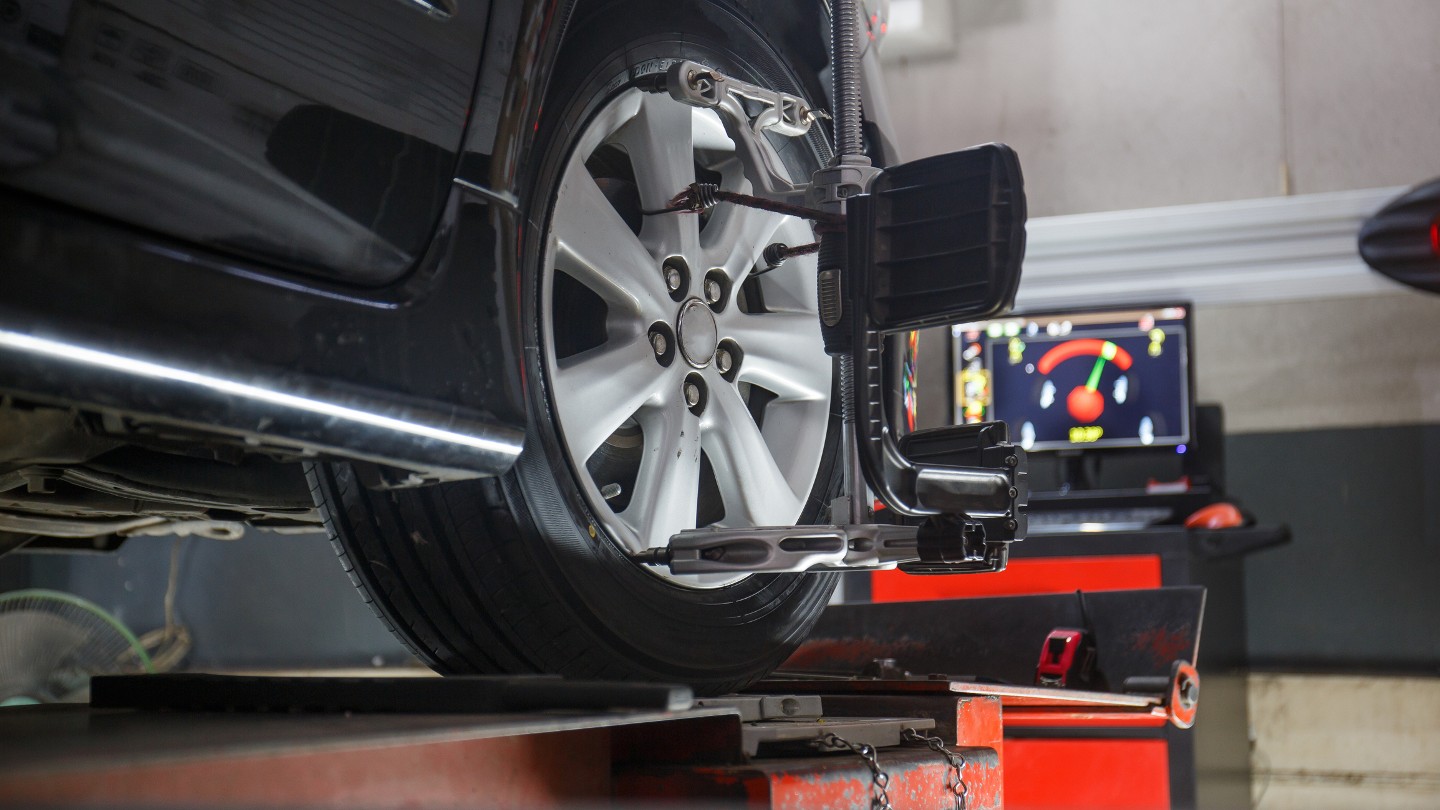
A dyno, short for dynamometer, is a piece of shop equipment that lets us run your engine under load while measuring its output. The two main types are engine dynos and chassis dynos. An engine dyno requires the engine to be removed from the vehicle and bolted to a fixture; it’s mostly used by engine builders and OEMs for development work. A chassis dyno measures the engine’s output through the drivetrain at the wheels, with the engine still in the vehicle. That’s the practical option for everyone outside of professional engine development, and it’s what we use at the shop.

On a chassis dyno, your vehicle is strapped down with the drive wheels sitting on heavy rollers. As you accelerate, the rollers spin and the dyno measures the torque your wheels produce against a controlled resistance, then calculates horsepower from those numbers. The result is a graph showing torque and horsepower across your engine’s RPM range. We use an AWD Mustang Dynamometer, which means we can run two-wheel drive, rear-wheel drive, all-wheel drive, and four-wheel drive vehicles on the same machine.

A few things to flag for first-time customers:

  • The numbers you’ll see are wheel horsepower and torque, not crank or flywheel horsepower. Wheel numbers are always lower than the crank numbers manufacturers advertise because some power is lost in the transmission, driveline, and tires. That loss is normal, not a tuning problem.
  • Different dynos can produce different numbers for the same vehicle. Air temperature, humidity, dyno brand, and tire condition all affect the result. The graph is most useful as a comparison tool: stock vs. tuned, before mod vs. after mod, run one vs. run five.

What does dyno tuning actually do?

Tuning means changing what the engine’s computer (the ECU) tells the engine to do. Modern engines manage fuel delivery, ignition timing, boost pressure (on turbo and supercharged engines), and several other parameters thousands of times per second. The factory tune is a calibration that has to work safely across every climate, fuel grade, and use case the manufacturer ships into. That’s a wide net, and it leaves room on the table.

A dyno tune lets us adjust those parameters for your vehicle, with real-time data showing how the engine responds to each change. We can see the air-fuel ratio, ignition timing, sensor outputs, and boost behavior under load instead of guessing from a code reader.

This is also where the safety part comes in. Aggressive tuning, too much boost, ignition timing pushed past what the fuel can handle, or a lean fuel map, can damage an engine. The dyno is what keeps that from happening. We can see knock, lean conditions, or unstable behavior in the data and back off before something breaks. Tuning by feel on the road, you might not notice until it’s too late.

Why daily drivers and lightly modified vehicles get dyno tunes

Most articles on dyno tuning skip past this and jump straight to performance builds. That’s a mistake, because it’s where the majority of real-world value lives.

  • Drivability and throttle response. A vehicle can make perfectly fine power on paper and still feel laggy, hesitant, or rough off the line. That’s almost always the tune, not the hardware. We can dial in throttle response and the transitions between RPM ranges so the vehicle drives the way you’d expect a healthy version of it to drive. In our experience, this is what most daily drivers benefit from most, and a lot of them never planned on tuning until they felt the difference in a friend’s truck.
  • Fuel economy. A dyno session can adjust the air-fuel ratio toward more efficient combustion without sacrificing power where it matters. This is genuinely useful on modified or high-displacement engines (lifted trucks, V8s with bolt-ons, diesels) where the factory tune wasn’t built around what’s now under the hood. Don’t expect miracles; expect a real, measurable difference that adds up over a year of driving.
  • Diagnostics. This is the one most people don’t realize the dyno is for. If your truck has a hesitation, a misfire under load, or a rough idle that doesn’t throw a code, the dyno can replicate the conditions that cause the problem and show us exactly what’s happening when it does. Air-fuel ratios, ignition behavior, and sensor outputs all log in real time. We’ve found fueling issues and sensor problems on the dyno that test drives and code readers had been missing for months.
  • After bolt-ons. A new cold air intake, exhaust, headers, or a tuner that uploads a generic map all change what the engine is doing. The factory ECU adapts to a point, but it can’t optimize around mods it doesn’t know about. A dyno tune after performance upgrades is what makes those parts deliver what they promised on the box.

Why dyno tuning matters for performance builds

For built engines, forced induction setups, and anything pushing meaningful power, the dyno isn’t optional. It’s the only way to verify that the tune is doing what you paid for and that the engine is running safely.

A few things we use the dyno for on performance work:

  • Verifying that a supercharger or turbo install is producing the boost it should and that fueling can support it
  • Mapping ignition timing and fuel for the specific fuel you’re running (93 octane, E85, race fuel; the right tune is different for each)
  • Catching knock or lean conditions before they damage pistons, rings, or rod bearings
  • Making sure aftermarket components are actually adding power, not just noise

The phrase “dyno-proven” gets thrown around in marketing for a reason. It’s the difference between we think this works and here’s the data.

What a typical dyno session looks like

A few things people often want to know before they bring a vehicle in:

  • Pre-dyno inspection. Before anything goes on the rollers, we check the basics: leaks, frayed wiring, tire pressure, fluid levels, belt, and hose condition. A bad ignition coil or a soft tire will skew results, and worse, it can fail under load. We don’t run cold engines on the dyno either; the first pull is steady-state to bring temps up.
  • Baseline pull. Stock or current-state numbers, before any changes. Without this, you can’t tell whether the tune actually moved anything.
  • Tuning runs. The tuner connects a laptop to the ECU, makes adjustments, and runs the vehicle again, watching air-fuel ratio, ignition, and other parameters live. This usually takes several pulls with a cool-down time between them.
  • Final pull and comparison. Once the tune is dialed, a final pull captures the after-tune graph. You leave with a printout showing what the engine made before and after.

How long this takes depends on the vehicle, the goals, and how clean the build is. A simple drivability and economy tune is faster than a full performance tune on a built engine.

Common questions we get about dyno tuning

Will dyno tuning damage my engine? 

Not when it’s done correctly. The whole point of using a dyno instead of tuning by feel is to prevent damage by catching problems in the data before they become physical. Bad tuning, anywhere, can damage an engine. The dyno isn’t the risk; an inexperienced tuner pushing past safe parameters is.

Do I need a dyno tune if I only added an exhaust and intake? 

You don’t strictly need one, but you’ll get more out of those parts with a tune than without. Bolt-ons change airflow, and the factory ECU only adapts so far. A dyno tune is what unlocks what the parts can actually do.

Will dyno tuning void my factory warranty? 

It depends on your manufacturer and what specifically is tuned. Powertrain modifications generally aren’t covered, and a dealer can decline a warranty claim if they determine a modification caused the failure. If your vehicle is under warranty and that matters to you, ask before tuning. We’re happy to walk through what does and doesn’t typically affect a claim.

Ready to see what your vehicle is actually making?

Whether you want to know what your truck is producing at the wheels, get more out of bolt-ons you’ve already installed, or chase down a drivability issue nobody else has been able to find, a dyno session is where the real answers come from. Stop by our Lewis Center or Hilliard location, or check out our dyno tuning and performance testing services to schedule a session.

STAY CONNECTED

Follow us online to keep up on future updates, discounts, new products, and new projects.

Reviews

Top