image

WHY YOUR CAR AUDIO SOUNDS WORSE THAN IT SHOULD

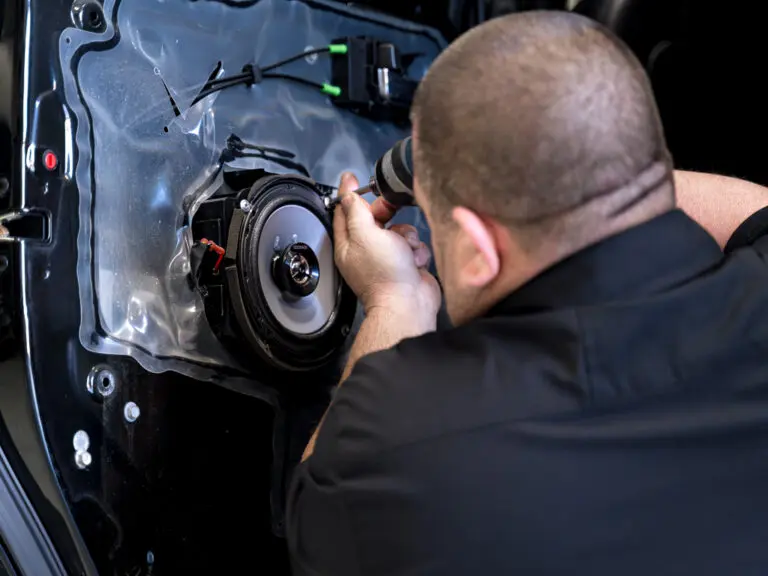
Factory speakers are cheap by design. Stamped steel baskets, paper cones, and thin magnets get the job done at low volume, but compress, lose midrange detail, and produce thin bass at anything louder. Swapping them for properly matched aftermarket speakers produces a noticeable difference. Coaxial units are a straightforward drop-in replacement, while component sets separate the tweeter for better staging and clarity. We also install acoustic baffles behind each speaker to reduce rattle and improve bass response.

Speaker replacement is the most common audio job we do. As part of our sound system services, we pull factory sizes, match the replacement to the location and power level, and install with baffles where the door cavity needs them. Come in to either our Lewis Center or Hilliard locations, and we'll help you meet your specific audio goals.

SCHEDULE WITH US

SPEAKER UPGRADE SERVICES WE PROVIDE

We install component and coaxial speaker sets in factory locations, using vehicle-specific fitment hardware to ensure the upgrade sounds as good as it should.

Coaxial Speaker Replacement

Coaxial speakers combine the woofer and tweeter into a single unit that installs in the factory speaker location. They are a straightforward upgrade that fits most vehicles without modification and produces a clear improvement over factory speakers in output quality and power handling. Coaxial speakers are a solid choice for drivers who want better sound without the complexity of a component system.

Component Speaker Sets

Component sets separate the tweeter and woofer into individual drivers. The tweeter is mounted at a location higher in the door panel or A-pillar for better stereo imaging, while the woofer handles the midrange and upper bass in the door. Component sets produce better staging and separation than coaxials because each driver can be positioned where it performs best. They are more involved to install correctly.

Speaker Baffles and Mounting Rings

Door panels are not acoustically ideal environments for speakers. Metal doors ring and vibrate, and the gap between the speaker and the door panel surface allows sound energy to cancel. Speaker baffles are foam or polymer enclosures that seat around the speaker, reducing rattle and improving bass response by creating a partial enclosure behind the driver. We use baffles where they make an audible difference, particularly in doors where the speaker is exposed to outside air.

Factory Location Fitment

Aftermarket speakers do not always drop directly into factory locations. Some vehicles require mounting ring adapters to match the speaker's bolt pattern to the factory opening, or trim rings to fill gaps where the speaker grille does not cover the full opening. We use vehicle-specific fitment hardware for every install so the speaker sits correctly, does not rattle against the panel, and looks factory when reassembled.

YOU NEED THIS IF:

  • Your factory speakers produce noticeable distortion at normal listening volumes
  • The sound from your current speakers has degraded over time and sounds dull or compressed
  • You have recently added an amplifier and the speakers are now the system's limiting factor
  • You want meaningfully better audio without changing your head unit or adding an amplifier
  • You are building out a new audio system and want properly installed component sets as the foundation

COMMONLY ASKED QUESTIONS

  • Do I need an amplifier to benefit from upgraded speakers?

    No, though an amplifier will allow the speakers to perform closer to their potential. Aftermarket speakers typically have better sensitivity ratings than factory speakers, meaning they produce more output at the same power level. An upgrade to quality coaxial or component speakers off factory head unit power will produce a clear improvement. Adding an amplifier later takes the same speakers significantly further.
  • What is the difference between coaxial and component speakers?

    A coaxial speaker is a single unit with the tweeter mounted in the center of the woofer cone. It installs in one location and handles the full frequency range above the bass. A component set separates the tweeter and woofer, allowing each to be positioned where it performs best: the tweeter high in the door or A-pillar, the woofer in the door. Component sets produce better stereo imaging and detail but require more installation work.
  • Why do factory speakers sound worse over time?

    Factory speakers use paper-based cones and foam surrounds that absorb moisture and degrade over years of use, especially in climates with seasonal humidity swings like Ohio. The foam surround is often the first to go: it dries out, cracks, and eventually separates from the cone, causing the speaker to rattle or produce reduced output. Aftermarket speakers typically use polypropylene cones and rubber surrounds that hold up better over time.
  • Will new speakers fit my vehicle's existing openings?

    In most cases, yes, with the correct mounting hardware. We use vehicle-specific adapters where the factory opening does not directly match the replacement speaker's dimensions. There are situations where a specific vehicle's door has unusual depth constraints that limit speaker options. We will check your vehicle before recommending specific speakers to make sure the fitment is correct.
  • How long does a speaker upgrade take?

    A full set of four speakers typically takes two to three hours depending on the vehicle's door panel complexity. Some vehicles have straightforward door panels that come off quickly; others have many fasteners and integrated wiring that require more care. We will give you a time estimate when you bring the vehicle in.

Contact form

form image

Reviews

Top