
Paint Protection Film vs. Clear Coat: Which One Actually Protects Your Car After Winter?
Clear coat isn’t optional. Every car comes with it from the factory, and without it, your paint would oxidize and fade within a couple of seasons. But many people think that because their car already has a clear coat, they’re covered. After a Central Ohio winter full of road salt, gravel, and freeze-thaw cycles, we see plenty of paint jobs that prove otherwise.
So what’s the difference between the clear coat that’s already on your car and the paint protection film you’d have installed? And does adding PPF actually make a meaningful difference once winter has already done its thing? Here’s the real answer.
What Clear Coat Is Actually Doing (and What It Can’t Do)
Clear coat is a transparent layer of urethane paint applied over your color coat during manufacturing. It’s chemically bonded to the paint below it and acts as the first line of defense against UV rays, light scratches, and minor contaminants. Without it, your paint would dull fast.
The problem is that the clear coat is thin, typically 1.5 to 2 mils, and it’s permanent. Once it’s chipped, scratched through, or etched by road salt, it doesn’t repair itself. You’re looking at paint correction or a respray to fix it. Clear coat also offers zero protection against rock chips, which is the number one complaint we hear after winter driving season.
It does its job well within its limits. It’s just not designed to take abuse.
What Paint Protection Film Actually Is
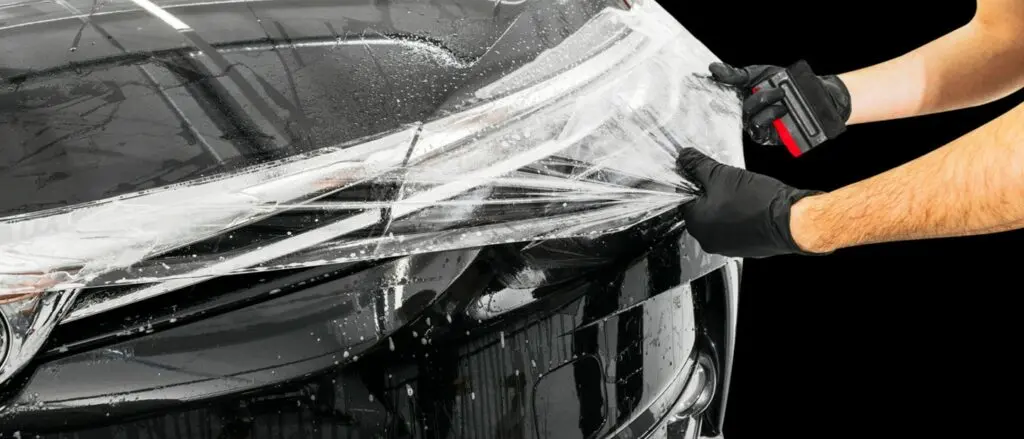
Paint protection film (PPF) is a thick, optically clear urethane film, typically 6 to 8 mils, that’s applied over your existing paint and clear coat. It acts as a physical barrier between your car’s finish and everything the road throws at it.
The big difference from clear coat isn’t just thickness. Most quality PPF products, like XPEL and SunTek, have a self-healing topcoat. Light swirl marks and minor scratches in the film can disappear on their own with heat. That’s not something any factory clear coat can do.
PPF also handles rock chips in a way that clear coat simply can’t. On highway drives, especially right after winter when road crews are still patching, and there’s gravel everywhere, those chips can go straight through unprotected paint. A properly installed PPF layer absorbs that impact and stays intact.
After Winter: Why This Question Comes Up a Lot
Winter in Ohio is rough on paint. Road salt is corrosive. Sand and gravel are constantly thrown at your hood and lower panels. Temperature swings cause expansion and contraction that can stress existing chips and cracks, letting moisture get under the clear coat and cause delamination.
We see a lot of cars come in after March and April with rock chip damage; people didn’t even notice during the winter because the cars were dirty. Once it’s clean, the chips are everywhere. If those chips went through the clear coat to bare paint or primer, you’ve got a rust risk.
PPF doesn’t prevent winter from happening, but it changes how winter affects your paint. The film takes the hits instead of your paint. And because PPF is replaceable, unlike your car’s original finish, you’re in a much better position if it eventually shows wear.
Does PPF Replace Clear Coat?
No, and it’s not meant to. The two work together. Your factory clear coat stays on the car, and PPF goes on top of it. You’re adding a layer of protection, not swapping one out for another.
This is worth understanding because some people ask if they should skip ceramic coating or clear bra and just get a paint correction and respray. For daily drivers who take regular road damage, PPF offers a level of physical impact resistance that no coating or respray can match.
Frequently Asked Questions
Does paint protection film look different from bare clear coat?
On a quality installation with a well-prepped surface, PPF is nearly invisible. Gloss PPF blends in with your existing finish. There are also matte and satin finishes available if you want to change the look of the car while protecting it. The main factors affecting visibility are the quality of the film and the installer. Poor prep or edge work is when PPF starts to show.
How long does paint protection film last?
Most quality PPF products carry a 10-year manufacturer’s warranty. Real-world longevity depends on the product, how the car is maintained, and where the film is installed. High-impact areas like the front bumper, hood leading edge, and rocker panels take more abuse and may show wear sooner than protected side panels. The self-healing properties of premium films hold up well over time as long as the car is washed regularly and kept out of prolonged direct sun when possible.
Can PPF be installed on a car with existing paint damage?
This is one of the more important things to know before booking an installation. PPF locks in whatever the paint underneath it looks like. If there are existing rock chips, oxidation, or swirl marks, those need to be addressed with paint correction first. Installing film over damaged paint doesn’t hide the damage; it preserves it. We always recommend a paint assessment before a PPF install so you know exactly what you’re working with.
Who Actually Needs PPF vs. Who Can Get by With Clear Coat Alone
You should seriously consider PPF if:
- You drive on Ohio highways regularly, especially in winter
- You have a newer vehicle and want to protect the original paint
- Your car has a dark paint color that shows rock chips and swirls easily
- You’re planning to keep the car for a long time, or want strong resale value
Clear coat alone may be fine if:
- Your car is older with high mileage, and you’re not concerned about cosmetics
- It’s a garage queen that rarely sees highway miles or winter driving
- You’re planning to sell soon, and resale value isn’t a factor
In our experience, the people who get the most value from PPF are daily drivers with newer vehicles, particularly trucks and SUVs that sit at the front of traffic and take constant road debris. We’ve installed it on everything from brand-new trucks to three-year-old daily drivers whose owners finally got tired of watching rock chips stack up.
One More Thing Most People Don’t Think About
PPF has a real impact on resale value, but not just because the paint looks better. A car with documented PPF installation and original paint in excellent condition is a stronger used vehicle than one with paint corrections, touch-up work, or respray panels. For higher-value vehicles, especially, buyers notice. It can also give you more negotiating confidence knowing the paint is genuinely protected, not just cleaned up before the sale.
Come Talk Through Your Options Before Summer Road Season Hits
If your car came through winter with more damage than you expected, or you want to get ahead of it before the road construction season starts, we’re happy to take a look. Stop by our Hilliard or Lewis Center location, and we’ll walk you through what makes sense for your specific vehicle, driving habits, and budget. No pressure, just straight answers. You can also schedule a consultation online if that’s easier.
Paint protection film isn’t the right answer for every car, but for many daily drivers in Central Ohio, it’s the most practical way to keep the original paint intact for the long haul.

STAY CONNECTED
Follow us online to keep up on future updates, discounts, new products, and new projects.


