
Signs Your Truck Needs a Dyno Tune (Not a Tune-Up)
You installed an intake and exhaust six months ago, and your truck still feels flat. Or it hesitates when you accelerate, surges at a steady cruise, or just feels lazy in a way it did not used to. If your maintenance is current and the truck still is not delivering, you may not have a parts problem at all. You may have a tuning problem, and those are two very different fixes.
Here is the distinction that matters. A dyno tune rewrites the software that controls your engine’s operation, while a tune-up replaces worn parts. They solve completely different problems, and a lot of the sluggishness and hesitation we see comes down to the calibration, not the hardware. Here are the signs that point to a tune, and how to tell a tune problem from a maintenance one so you do not spend money in the wrong place.
Tune Problem or Maintenance Problem? How to Tell
Symptoms like hesitation, sluggishness, and losing power while driving can come from either side, which is exactly why people get this wrong. On the maintenance side, a dirty air filter, worn spark plugs, a failing fuel pump or injectors, a lazy oxygen sensor, or a clogged catalytic converter will all make a truck feel down on power. On the tuning side, the problem is the calibration itself, the map that tells your engine how much fuel to add and when to fire the spark, not matching your actual setup.
The quickest way to tell them apart is history and timing. Did the problem show up right after you added parts or loaded a new tune, and is your routine maintenance actually up to date? The first thing we do is rule out the mechanical stuff, because no tune on earth fixes a clogged catalytic converter. Once the basics check out and the truck is still not right, the calibration becomes the prime suspect.
The Clearest Sign: You Added Bolt-Ons and It Still Feels Flat
This is the one that sends most people to us, and it is the clearest tune signal there is. When you bolt on an intake, an exhaust, headers, or a bigger throttle body, your truck’s computer is still running the calibration it left the factory with, which was written for the completely stock configuration. It does not automatically take advantage of the extra airflow those parts provide. So the gains you paid for often just are not there, and in some cases the air-fuel balance is now slightly off and the truck actually feels flatter or rougher than it did before you touched it.
A dyno tune rewrites the fuel and timing to actually use those parts, and that is the step that turns a pile of performance upgrades into real, measurable power. In our experience, this is the single most common tune situation we see: good parts, no tune, and an owner who is frustrated that the truck does not feel any faster. The parts are not the problem. The missing tune is.
Other Signs Your Calibration Is Off
Beyond the bolt-on situation, here are the symptoms that point at the tune rather than the hardware.
A flat spot or hesitation in a specific RPM range when you accelerate usually means the fuel or timing map has a gap in it right there.
Surging or hunting at a steady cruise is a sign the fueling is not settled where it should be when the engine is just coasting along.
Lazy throttle response or a sluggish feel off the line, on a truck whose maintenance is current, often traces back to how the calibration handles those transitions.
Signs of running rich or lean, meaning a fuel smell and black smoke on the rich side, or pinging, knock, and running hot on the lean side. A tune corrects both, and a lean condition in particular is not something to drive around with.
Boost with no tune. If you added a supercharger or turbo without a proper tune, this is not optional. Forced induction changes the engine’s air and fuel demands dramatically, and running boost on a stock calibration can go lean and cause real, expensive engine damage.
A generic off-the-shelf tune that was not built for your exact truck, mods, and fuel can leave the vehicle driving worse than stock, since it is a one-size map rather than one dialed in for your combination.
Rough or inconsistent shifts can be a tune issue too, because on many modern trucks, the transmission is controlled by the same calibration as the engine.
Why It Takes a Dyno, Not a Guess
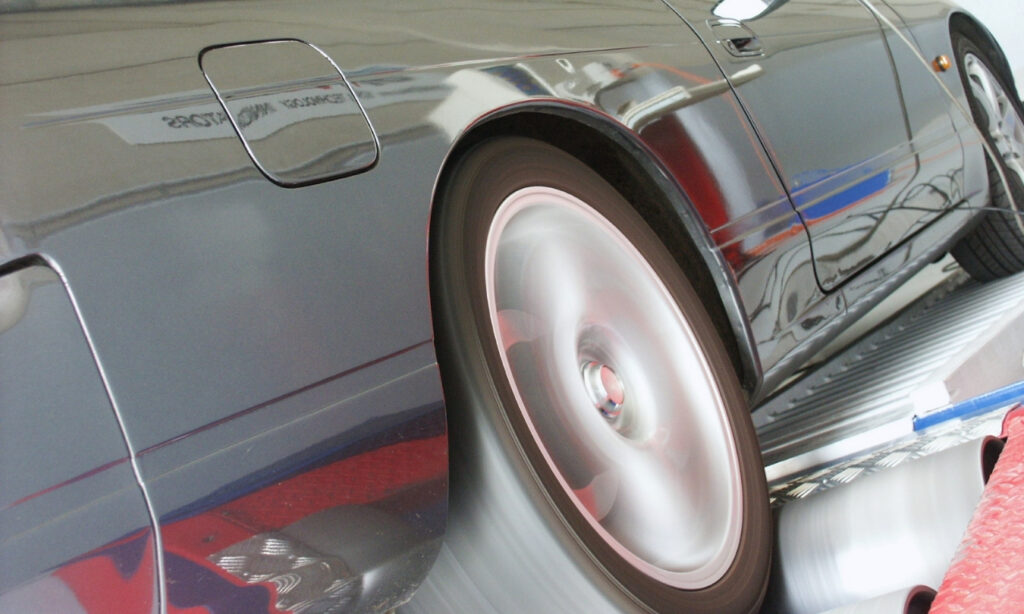
You can adjust a tune by feel out on the street, but you cannot actually see what the engine is doing while you do it. On our AWD Mustang dyno, we measure real wheel horsepower and, more importantly, watch the air-fuel ratio and ignition timing while the engine is under load. That lets us make the truck both stronger and safer, instead of guessing and hoping. We have seen tunes that looked perfect on paper run poorly, or dangerously lean, once there was a real load on the engine, and the dyno is how we catch that before it costs you an engine.
What This Means for Your Truck
If you have done bolt-ons and never tuned, you are almost certainly leaving power on the table, and the tune is the payoff step you have been missing. If you added forced induction, a tune is not a luxury; it is protection for the engine you just spent money on. And if your truck is completely stock and suddenly feels sluggish, start with maintenance and diagnostics rather than a tune, because in that case, the calibration is probably not your problem.
Common Questions About Tuning Symptoms
Why does my truck hesitate when accelerating or feel sluggish?
It can be either a maintenance issue or a tuning issue, which is what makes it confusing. Worn plugs, a dirty filter, or failing fuel and sensor components can all cause it, and so can a calibration that does not match your setup. The tell is whether it started after you added parts or loaded a tune, and whether your maintenance is current. A dyno pull collects real-time data that isolates which side the problem is actually on.
Do I need a tune after adding an intake and exhaust?
If you want the full benefit of those parts, yes. The factory calibration will not use the extra airflow on its own, so a dyno tune is what actually unlocks the gains. Plenty of people are surprised that their bolt-ons felt like almost no change, and the missing tune is why. It is the difference between installing parts and actually using them.
Will a dyno tune fix a truck that loses power?
If the cause is the calibration, your mods, a bad off-the-shelf tune, or forced induction running on a stock map, then yes, a proper tune addresses it directly. If the power loss is a mechanical or maintenance fault, a tune will not fix it, and we will tell you that straight rather than sell you something you do not need. Because the right answer depends on your specific truck and setup, every job is quote-based after we see what is going on.
Think Your Truck Needs a Tune?
If your truck feels flat after a round of upgrades, hesitates when you get on it, or just is not the truck you built it to be, we can put it on the dyno and find out exactly why. Stop by our Lewis Center or Hilliard location and we will pull real data, tell you honestly whether it is a tune or a maintenance issue, and give you a straight quote either way. We would rather send you home with the right fix than the expensive one.

STAY CONNECTED
Follow us online to keep up on future updates, discounts, new products, and new projects.


