
Does Aftermarket Exhaust Actually Add Horsepower? The Honest Truth
Short answer: yes, but probably not as much as the marketing wants you to believe. If you’ve seen ads promising “50 horsepower from a bolt-on exhaust,” your skepticism is healthy. The real numbers are more modest, and honestly, the horsepower is often not even the best reason to do it. Let’s cut through the hype and talk about what a cat back exhaust and a muffler delete actually do, backed by real dyno data, so you can decide if it’s worth it for your truck.
We install these systems all the time, and we’d rather give you straight answers than oversell you. Here’s what’s real, what’s a myth, and what to expect. If you want to see the exhaust options we work with, we’re happy to walk you through them in person.
What a Cat Back Exhaust Actually Does
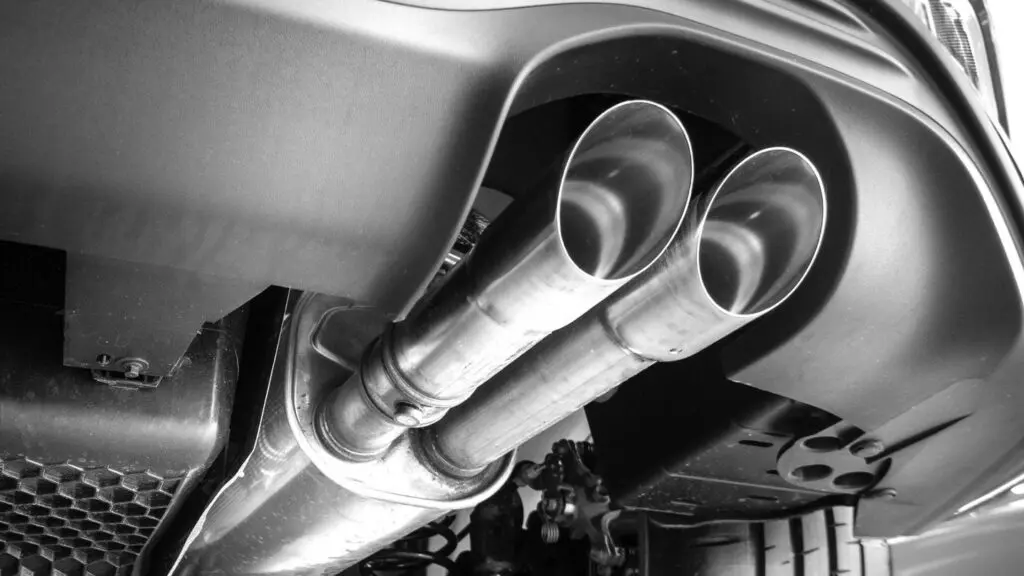
A cat-back exhaust replaces everything from the catalytic converter back: the mid-pipe, muffler, and tailpipe. Factory exhaust is built around cost, quiet, and emissions rules, which usually means smaller-diameter pipes, crush bends, and a restrictive muffler stuffed with baffles. A quality cat back opens that up with mandrel bends and larger, smoother piping, so your engine breathes a little easier on the way out.
The keyword is “little.” Because a cat-back only touches the parts behind the cat, it’s a moderate-flow upgrade, not a miracle. On most trucks, the real payoff shows up as better throttle response, a smoother pull through the rev range, and a much better sound, not a giant jump on the dyno.
The Real Dyno Numbers
Here’s where we get honest. Independent dyno testing consistently shows that a cat-back exhaust on a stock gas truck picks up about 5 to 15 horsepower, and on many naturally aspirated setups, it’s closer to 2 to 5 at the wheels. Not 50. Anyone promising 50 from a cat back alone is selling you something.
A few things move that number:
- How choked your stock system was. If your factory setup runs skinny, restrictive piping, you’ll feel more. If it already has decent-sized dual pipes, the gains shrink because there’s less restriction to remove.
- Gas vs. diesel. Diesel trucks often see more, roughly 10 to 20 horsepower on many setups, and the bigger win is lower exhaust gas temps and better boost response under load. For a truck that tows, that thermal benefit matters more day to day than a peak number.
- Whether it’s part of a bigger package. Exhaust really shines alongside an intake and a tune. Stacked together, the airflow gains add up in a way a single bolt-on can’t match.
There’s also a bonus most people forget: weight. A quality cat-back often sheds 20 to 50 pounds compared to the heavy factory setup, which improves your power-to-weight ratio in ways the horsepower figure alone doesn’t capture.
What a Muffler Delete Really Gets You
Let’s be blunt about the muffler delete, because people expect power from it, and that’s not really the point. Removing the muffler and running a straight pipe in its place is mostly a sound-and-looks mod. The muffler is a small part of the overall restriction, so on its own, a muffler delete usually adds very little measurable power to a modern truck.
What it does add is volume, a lot of it, and often drone. If your main goal is a louder, more aggressive tone and you’re not chasing real numbers, that’s fine, just go in knowing it’s a sound choice, not a performance one. In our experience, most folks who think they want a straight muffler delete are actually happier with a well-designed cat back that sounds great without turning every drive into a headache.
Busting the Three Big Myths
Myth 1: It’ll drone so bad you’ll regret it. Drone is real, that low, boomy resonance at cruising RPM, but it’s not inevitable. It mostly comes from cheap or overly aggressive setups, especially straight-pipe and muffler-delete jobs. A quality cat back with the right muffler and, if needed, a resonator, tames it. The trick is matching the system to your truck instead of just buying the loudest thing online.
Myth 2: It’ll throw a check engine light. A proper cat-back exhaust keeps your catalytic converters and oxygen sensors exactly where the factory put them, so it does not trigger a check engine light. The CEL problems people run into come from cat deletes or O2 sensor changes, which are a different thing entirely and carry emissions issues we’ll steer you away from for a street truck. Cat back, done right, keeps your sensors happy.
Myth 3: It voids your warranty. This is the big one, and it’s mostly false. Under the federal Magnuson-Moss Warranty Act, a manufacturer cannot void your entire vehicle warranty just because you installed an aftermarket part. If they want to deny a specific claim, the burden is on them to prove that your exhaust actually caused that specific failure. A dealer can’t just wave you off because your truck has a cat back on it. Keep your paperwork, use quality parts, and you’re on solid ground.
Common Questions We Get at the Counter
Will a cat-back exhaust really make my truck faster?
It’ll make modest power, usually single digits to mid-teens in horsepower on a stock gas truck, and it’ll often feel a little punchier thanks to better throttle response. If you’re after a big, seat-of-the-pants speed change from exhaust alone, you’ll be underwhelmed. Pair it with an intake and a tune and now you’re talking about gains you can actually feel.
Is a cat-back or a muffler delete better?
Depends on your goal. If you want a genuine flow upgrade with a great sound and no drama, a cat back is the better buy. If you only care about maximum volume and cost is your main concern, a muffler delete gets loud fast, but expect drone and minimal power. We generally point people toward a quality cat back because it does more and ages better.
How much does an exhaust system cost?
That one depends on your truck, the material you want, like aluminized versus stainless steel, the brand, and how the system’s configured. Since every setup is a little different, we quote it based on your specific truck rather than throwing out a number that won’t hold up. Swing by either shop and we’ll price out exactly what you’re after.
Who Should Actually Do This
A cat back makes the most sense if you want better sound, a modest performance bump, and a quality piece that lasts, especially if you plan to add an intake or tune later. If you tow or haul, the diesel thermal benefits are a real, practical reason to do it. And if you mostly just want your truck to sound meaner, we can point you to a system that delivers that without the drone that makes long highway drives miserable.
Ready to Talk Exhaust?
If you want a straight answer about what a specific system will do for your truck, come talk to us. We’ll tell you honestly what kind of gains and sound to expect, no marketing fluff. Stop by our Lewis Center or Hilliard location to talk through your options, or schedule a consultation online. We’ve been doing this since 1999, and we’d rather set you up with the right system than the loudest one.

STAY CONNECTED
Follow us online to keep up on future updates, discounts, new products, and new projects.


