
Clear Bras and Paint Protection Film: The Complete Guide to Protecting Your Paint
Here is the thing most people get wrong: a ceramic coating will not stop a rock chip. The two products get talked about like they do the same job, but only one of them actually takes the hit for your paint, and that is paint protection film. If your real worry is the gravel on the highway putting a star in your hood, a coating is not the answer.
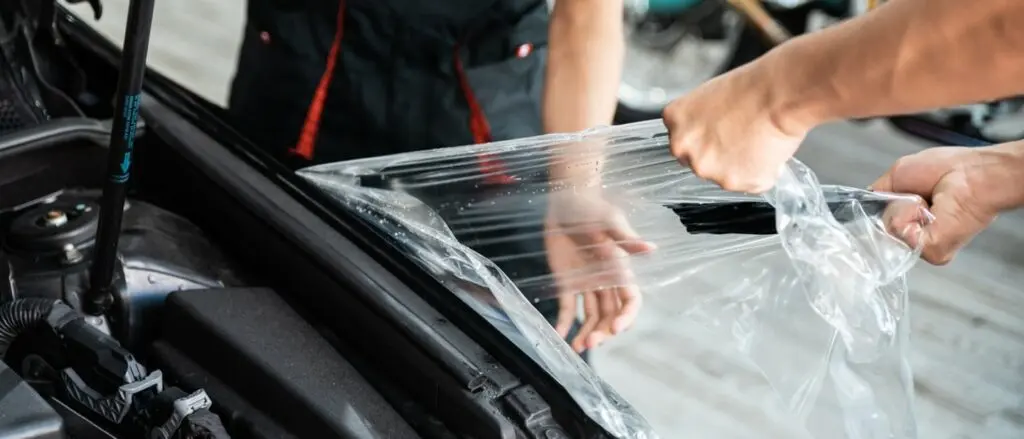
Paint protection film, PPF, and a clear bra are all names for the same thing: a clear urethane film applied over your paint to absorb chips, scratches, and debris before they ever reach it. It is the single best defense against what Ohio roads throw at your front end all year. Here is what it actually is, how it works, how it stacks up against ceramic coatings and wraps, and how to figure out how much of it you really need.
What a Clear Bra Actually Is
A clear bra is a thin, tough thermoplastic urethane film that bonds to your vehicle’s painted surfaces and shields them from physical damage. The technology traces back to protecting military helicopter rotor blades from debris, and it has been adapted to do the same job for cars, trucks, and SUVs. It is applied either to the high-impact zones that take the most abuse, meaning the hood, front bumper, fenders, side mirrors, and door edges, or across the entire vehicle. Because a quality film is optically clear, it protects without changing how the vehicle looks.
How Paint Protection Film Actually Protects Your Paint
The film does its job in layers. A tough urethane layer absorbs and spreads out the energy of an impact, so a piece of gravel stops in the film instead of chipping your clear coat. Underneath, an adhesive layer bonds the film to the paint and can be removed cleanly down the road. On top sits a clear coat with a self-healing topcoat, which means light surface scratches and swirl marks reflow and disappear when the film warms up in the sun or under warm water. Quality films are also UV-stabilized, so they resist the yellowing that gave cheap film a bad name years ago.
Here is the honest limit. PPF is impact and abrasion protection, not armor. It shrugs off rock chips, road rash, bug etching, and light scratches, but a hard enough impact or a deep gouge can still get through to the paint. It also does not stop a dent. What it does, it does extremely well, and for most people the front-end chips are exactly the problem worth solving.
PPF vs Ceramic Coating vs Wax vs Vinyl Wrap
This is where people get tangled up, so here is the plain version.
Paint protection film is physical protection. It is the only one of these that stops a rock chip or a scratch from reaching the paint. A ceramic coating or sealant is chemical protection. It bonds to the paint and guards against UV rays, contamination, and water spots while adding gloss and making the surface easier to clean, but it will not stop physical damage. A wax does a lighter version of what a coating does and lasts months rather than years. A vinyl wrap is mostly about looks and color changes. It is thinner and not built to take impacts the way PPF is.
In our experience, the setup people are happiest with is a combination: PPF on the high-impact areas that take the hits, with a ceramic coating over the rest of the vehicle for that slick, easy-to-clean surface. The film handles the physical threats and the coating handles the chemical ones. You can also put a ceramic coating right on top of the film to get the best of both.
Partial or Full Coverage: How Much PPF You Actually Need
Partial coverage protects the zones that take the vast majority of the damage: the front of the hood, the bumper, the fenders, the mirrors, and the door edges. For most daily drivers, that covers the real-world risk, and it is the configuration we install most often. Full-vehicle coverage wraps every painted panel in film and makes the most sense on new vehicles, high-value vehicles, builds you plan to keep long-term, or anything headed into extended storage.
The tradeoff is straightforward. Full coverage costs more and takes more time, while partial coverage handles the practical risk for a lot less. We will give you an honest recommendation based on your vehicle and how you actually drive it, rather than pushing you toward the biggest package.
How Long PPF Lasts and How to Maintain It
A quality clear bra generally lasts around 7 to 10 years, and the better films carry warranties up to a decade against defects like yellowing, cracking, and bubbling. Getting there depends on two things: a clean install on properly prepped paint, and reasonable care afterward. Wash it with PPF-safe soap, skip the automatic car washes with stiff abrasive brushes, and consider a ceramic topper to make the film even slicker and easier to keep clean.
When the film eventually reaches the end of its life, a professional can heat it and peel it off without harming the paint underneath, as long as that paint was in good shape when the film went on. That last part matters, which is why we look closely at your paint before installing anything.
Common Questions About Clear Bras and PPF
Is a clear bra worth it?
It depends on the vehicle and how you drive. If you have a new or high-value vehicle, or you rack up highway miles and your hood is already collecting chips, PPF pays for itself by keeping the factory paint intact, which also protects resale value. If you drive an older vehicle you are not precious about, it may not be worth the investment. There is a real upfront cost, and we would rather be straight with you about that than oversell it.
Does the self-healing really work?
Yes, for what it is designed to do. Light surface scratches and swirl marks in the film reflow and vanish when the film gets warm, so the surface keeps looking clean without polishing. What it will not do is repair a deep gouge or a chip that punches all the way through the film. It is a genuine feature of quality PPF, not a marketing gimmick, as long as you understand it works on the film’s surface, not on damage that gets past it.
How much does a clear bra cost?
There is no flat price, because it depends on how much of the vehicle you are covering, the size and shape of the panels, and the quality of film you choose. A few door edges and a partial front is a very different job than a full-vehicle wrap. Rather than quote a number that will not match your vehicle, come in and we will look it over and give you a straight price. Every install here is quote-based.
Ready to Protect Your Paint?
If you are tired of watching your hood collect chips every time you hit the highway, a clear bra is the fix that actually addresses the problem. Stop by our Lewis Center or Hilliard location and we will look at your vehicle, talk through partial versus full coverage, and walk you through whether pairing the film with a ceramic coating makes sense for how you drive. Schedule a consultation any time, or just swing in.

STAY CONNECTED
Follow us online to keep up on future updates, discounts, new products, and new projects.


