
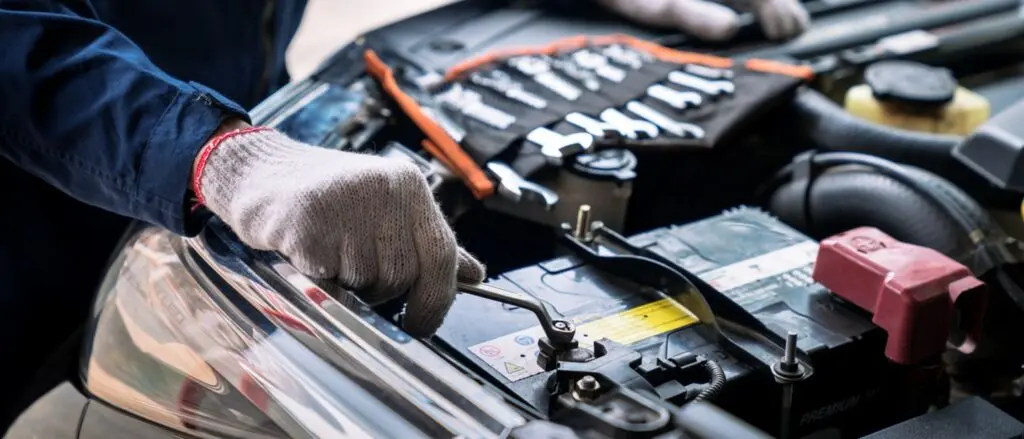
Battery Trouble in Cold Weather: Why Winter Kills Car Batteries
Short answer: yes, cold weather absolutely can kill your car battery, and it does it two ways at once. The cold slows down the chemistry inside the battery so it makes less power, and at the same time your engine gets harder to turn over because the oil has thickened. So right when your battery is at its weakest, your engine is asking the most of it. That is why so many batteries that seemed fine in November die in the first hard freeze.
The good news is that a winter battery failure almost never comes out of nowhere. There are warning signs, and a quick test tells you where you stand before you are stuck in a cold parking lot. Here is what the cold actually does, why it tends to expose a battery that was already on its way out, and how to get ahead of it. If you would rather just know for sure, our battery testing checks exactly that.
How Cold Actually Drains Your Battery
Your battery makes power through a chemical reaction, and like most chemistry, that reaction slows down when it gets cold. A slower reaction means less current available to crank the engine. According to AAA, a car battery loses about a third of its power in freezing temperatures, and it only gets worse as the thermometer keeps dropping.
Now stack the second problem on top. When it is cold, your engine oil thickens up, so the starter has to work harder and draw more current to spin the engine over. You end up with a battery producing less power being asked to deliver more. That combination is the whole story of winter battery failure, and it is why a battery can crank fine at 40 degrees and then do nothing but click at 5 degrees.
Why Winter Exposes a Battery That Was Already Weak
Here is the part people find surprising. Cold weather usually is not what wore your battery out. It is just what reveals the damage. In our experience, the real killer is summer heat, which slowly evaporates the fluid inside the battery and corrodes the internal plates over months. The battery limps through fall at reduced capacity, and then the first cold snap demands full power it no longer has.
That is also why battery age matters so much. Most car batteries last somewhere between three and five years, and once you are past that three-year mark, winter is the season that finds the weak ones. A battery on its last legs will often get you through mild weather right up until the morning it does not. So if yours is a few years old and you have noticed anything feeling off, the cold is not going to be kind to it.
The Warning Signs Your Battery Is About to Quit
Batteries usually give you a heads-up before they leave you stranded. These are the ones worth acting on, especially heading into winter.
A slow, labored crank. If the engine turns over more slowly than it used to, that lazy groan is the classic sign the battery is struggling. It is the single most common warning we hear described.
Clicking but no start. A rapid clicking when you turn the key often means the battery does not have enough juice to engage the starter.
Dimming headlights or flickering dash lights, particularly at idle or when you first start up, point to a battery or charging system that is not keeping up.
Needing a jump start. If you have had to jump it even once, treat that as a clear signal to get it tested rather than a one-off fluke.
Age past three years, plus any electrical weirdness like slow windows or a dashboard battery light, is reason enough to check it before the cold does it for you.
What Actually Helps Going Into Winter
You cannot change the weather, but you can keep the cold from stranding you. A few things genuinely make a difference.
The most useful one is simple: get the battery tested before winter, not after it fails. A proper test checks the battery’s load and cold cranking amps, and just as important, it tests the charging system to see whether your alternator is actually keeping the battery topped up. That last part matters because a lot of “bad battery” calls are really a failing alternator, and we test both before recommending anything so you are not replacing the wrong part.
Beyond testing, parking in a garage keeps the battery warmer and meaningfully easier to start. Clean, tight terminals matter too, since corrosion adds resistance that makes a cold-weather start even harder. And short trips are rough on a battery in winter, because a two-minute drive does not run long enough to recharge what starting the car just pulled out. If all you do is quick errands, the battery slowly falls behind.
Common Questions About Cold Weather and Car Batteries
How cold is too cold for a car battery?
There is no hard cutoff, but the effect ramps up fast once you are below freezing, and a battery that is already weak can fail anywhere in that range. A brand-new, healthy battery can handle deep cold without much trouble. An older one that has lost capacity over the summer is the one that quits. That is why age and condition matter more than any single temperature number.
How do I know if it is my battery or my alternator?
This is the question that saves people money, and honestly, you cannot tell for sure by feel. The usual tell is timing. If it will not start after sitting overnight, the battery is the prime suspect. If it dies while you are driving or right after a jump, the alternator that is supposed to be recharging it is more likely the culprit. The reliable answer comes from testing both, which is exactly what we do rather than guess.
Can a car battery recover once it dies in the cold?
Sometimes, partly. A battery that was simply drained can take a charge again, but every deep discharge and every hard cold-weather start takes a little life out of it permanently. If a battery has already left you stranded once, it has told you what it is going to do, and the smart move is to test it and plan the replacement on your terms instead of on a frozen morning.
Get Your Battery Tested Before the First Hard Freeze
If your battery is a few years old, cranking slow, or has needed even one jump, do not wait for the cold to make the decision for you. Stop by our Lewis Center or Hilliard location and we will load test the battery, check the charging system, and tell you honestly whether it is still good for another winter or living on borrowed time. Every job is quote-based, because the right battery depends on your vehicle’s group size and cold cranking needs. We would rather test it in the shop than jump it in a parking lot.

STAY CONNECTED
Follow us online to keep up on future updates, discounts, new products, and new projects.


