
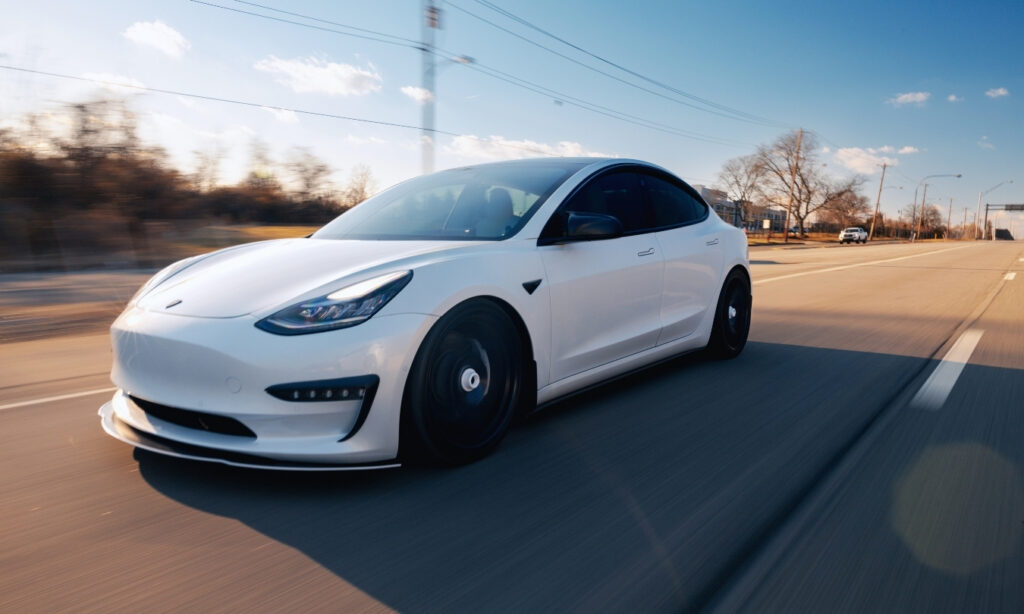
Suspension Upgrades for EVs: What the Battery Weight Changes
Here is what a lot of shops will not mention before they bolt a lift kit onto your Tesla: your EV weighs far more than the gas vehicle it looks like it should be, and that weight changes how every suspension upgrade behaves. A Model Y is not just a slightly heavier crossover. It is carrying well over a thousand pounds of battery down low in the chassis, and a suspension upgrade that ignores that fact is how a good idea turns into a sagging, worn-out, poor-handling mess.
Suspension upgrades for EVs are absolutely doable, whether you want to lift a Model Y for ground clearance, drop one for handling, or figure out what a Cybertruck actually needs. They just have to be done with the weight in mind. We work on electric vehicles from Teslas to the Cybertruck, so here is what actually matters when you upgrade an EV’s suspension, starting with the technical point most articles skip entirely.
The Battery Weight Problem Most Suspension Articles Ignore
EVs are dramatically heavier than comparable gas vehicles, and the gap is not small. According to Michelin, the average EV’s battery weight alone runs around a thousand pounds, and on some vehicles it is well past that. Tesla lists the Model Y at roughly 4,200 to 4,400 pounds, depending on trim, with the battery pack accounting for well over 1,000 of those pounds on its own. A Cybertruck tips the scales past 6,600 pounds.
That mass sits low and central in the chassis, which is actually great for stability straight from the factory. But it also means the suspension is already managing a serious load before you change a single part. Every upgrade, whether it is a lift, a lowering kit, or new springs and dampers, has to be rated for that weight. When it is not, the vehicle sags, blows through its suspension travel over bumps, rides harshly, and chews through components faster than it should. In our experience, this is the single biggest reason upgrading an EV’s suspension is not the same job as doing it on a gas car, and it is the part most people never hear about until something goes wrong.
Lifting a Tesla Model Y: What It Takes and What It Costs You
Yes, you can lift a Model Y. Leveling and lift kits using spacers and extended links add ground clearance and give you the rugged, overland look that is popular right now. But be clear-eyed about the tradeoffs, because they hit harder on an EV than on a gas SUV.
Raising the ride height raises the center of gravity, which the low battery was keeping nice and low, so the handling changes. It also increases aerodynamic drag, and because EVs are far more sensitive to drag than gas vehicles, that lift costs you range in a way it simply would not on a gas SUV. On top of that, the components have to be rated for the vehicle’s weight, the suspension geometry has to be corrected, and an alignment afterward is not optional. A lift also changes the angles of the cameras and sensors that power driver-assist systems, often requiring recalibration. For most owners, a modest lift for clearance and looks is realistic. Just know that these vehicles are not built for serious off-road work.
Lowering a Model Y or Model 3: Sharper Handling, Real Tradeoffs
On the other end, many owners lower their Teslas for tighter handling and a more aggressive stance. The same core rule applies: the springs and dampers must match the EV’s actual weight, or you end up with a harsh ride and insufficient suspension travel on actual roads.
Lowering can slightly improve aerodynamics and range, which is a nice bonus. But the heavy battery already gives these cars a low center of gravity from the factory, so the handling improvement is usually smaller than people expect, and the ride comfort on rough, frost-heaved Ohio roads is very real. It is a legitimate upgrade, just one worth going into with honest expectations.
The Cybertruck Is a Different Conversation
This is where a lot of “Cybertruck lift kit” searches go sideways, so here is the straight version. The Cybertruck comes from the factory with adaptive air suspension that automatically adjusts its ride height, providing up to 17 inches of ground clearance at its tallest setting. That means bolting on a traditional lift kit is not the same conversation as it is on a Model Y, because the truck can already lift itself.
Aftermarket work on a Cybertruck tends to be about other things, like fitting larger tires, adjusting how the air suspension behaves, or specific setups for a particular use, and all of it has to work cleanly with the truck’s electronics and that factory air system. If you own a Cybertruck, the smart first move is understanding what the factory suspension already does before you spend money trying to add what you may already have.
Why EV Suspension Work Needs Someone Who Knows EVs
The thread running through all of this is that an EV is not a heavy gas car, and treating it like one is where things go wrong. Doing the job right means using components genuinely rated for the weight, correcting the suspension geometry, getting an alignment dialed in afterward, recalibrating the driver-assist sensors when the ride height changes, and understanding how any of it affects your range and, where applicable, your air suspension. The margins are tighter and the electronics are more involved than on a gas vehicle, so a mistake is more expensive to unwind. That is exactly why we assess the specific vehicle and what you are actually trying to accomplish before we recommend anything.
Who Should Upgrade Their EV’s Suspension
If you have a Model Y and you want more ground clearance or that overland look, a modest lift makes sense as long as you go in clear on the range and handling tradeoffs. If you are chasing handling or a lower stance on a Model Y or Model 3, a lowering setup with weight-rated parts is the move. If you own a Cybertruck, start with the factory air suspension and build any aftermarket plan around it. And if your EV is simply sagging under load or riding poorly, the fix is usually the right springs and dampers for the weight, not a wholesale change.
Common Questions About EV Suspension Upgrades
Can you lift a Tesla Model Y?
Yes, with a leveling or lift kit that adds ground clearance. The catch on an EV is that lifting raises the center of gravity, adds aerodynamic drag that costs you range, and requires an alignment and often a sensor recalibration afterward. It is a great upgrade for clearance and the look you are after, but it is not setting the vehicle up for serious off-roading.
Does lifting or lowering an EV hurt range?
It can, and this is the part people miss. EVs are very sensitive to aerodynamics, so lifting adds drag and usually costs you some range, while lowering can recover a little. On top of that, the vehicle’s weight means the suspension parts have to be correct, or you’ll lose efficiency and ride quality, in addition to any change in range. It is worth weighing the look you want against the range you are willing to give up.
How much does an EV suspension upgrade cost?
It depends on the vehicle and the goal, since a Model Y lift is a different job than Cybertruck work or a lowering setup, and the weight-rated parts and any alignment and recalibration all factor in. Rather than quote a number that will not match your situation, we look at your specific EV and what you want to do, then give you a straight price. Every job here is quote-based.
Thinking About Upgrading Your EV’s Suspension?
Whether you want to lift a Model Y, lower a Model 3, or sort out what your Cybertruck actually needs, the key is to do it with the vehicle’s actual weight and electronics in mind. We work on everything from Teslas to the Cybertruck to Rivians, and we will spec parts rated for the job, handle the alignment and any recalibration, and tell you honestly what the tradeoffs are. Stop by our Lewis Center or Hilliard location or schedule a consultation, and we will help you build it right.

STAY CONNECTED
Follow us online to keep up on future updates, discounts, new products, and new projects.


