
Fiberglass vs. Aluminum Truck Caps: Which Material Is Right for You?
The honest version of this comparison is shorter than most articles make it. Fiberglass gets you a cap that looks like it came with the truck, insulates better, and runs quieter. Aluminum gets you something lighter, tougher against dents and dings on a work site, and easier to take on and off. Almost every other difference between the two flows from those two personalities, and which one is right for you comes down to whether your truck is mostly a work vehicle or mostly the one parked in your driveway.
That said, three specific differences do most of the deciding, and they’re the ones people underestimate: weight, insulation, and paint. Here’s how the two materials actually compare on each, plus what we’ve learned fitting truck caps on Central Ohio trucks for over 25 years.
Weight: the difference you feel every time you remove it
This is the practical gap, and it’s bigger than the spec sheet suggests.
A fiberglass cap for a typical half-ton short bed generally lands somewhere in the range of 150 to 200 pounds. A comparable light-duty aluminum cap usually runs meaningfully lighter, often in the 100 to 150 pound range depending on construction and options. LEER, one of the major cap manufacturers, puts it plainly: fiberglass caps tend to be heavier than aluminum, and that weight affects fuel economy and handling.
Where that difference actually shows up is removal. Most aluminum caps can be lifted off by two people who know what they’re doing. Most fiberglass caps realistically need four people, or a hoist, or a set of cap jacks. That’s the difference between “I’ll pull the cap off this weekend to haul mulch” and “the cap is staying on until I have a reason and three friends.”
So the real question isn’t which number is smaller. It’s how often you plan to take the cap off. If the answer is a few times a year, the weight matters. If the answer is basically never, it mostly doesn’t.
One caveat worth knowing: heavy-duty aluminum caps with integrated side toolboxes get much heavier, and at that point the weight advantage largely disappears. The lightweight reputation belongs to standard aluminum caps, not the commercial-grade ones.
Insulation: fiberglass wins, and it matters more than you’d think
Fiberglass is simply a better insulator than aluminum. Aluminum is a metal, and metal conducts heat and cold efficiently, which is exactly what you don’t want in an enclosure you’re trying to keep at a stable temperature.
In practice, this shows up three ways:
- Temperature swings. A fiberglass cap holds a more stable interior temperature than an aluminum one. On a hot day an aluminum cap turns the bed into an oven faster. In an Ohio January, it gets cold in there quicker too. If you’re hauling anything temperature-sensitive, tools with sensitive electronics, adhesives, paint, plants, groceries on a long drive, that gap is real.
- Condensation. Because aluminum transfers cold so readily, an aluminum cap is more prone to interior condensation when the temperature outside drops and there’s any moisture in the bed. Wet gear in the morning is a common complaint.
- Noise. Fiberglass absorbs sound better than sheet metal. Aluminum caps are noticeably louder at highway speed and in wind, and they can drum or rattle over rough pavement in a way fiberglass doesn’t.
If you’re sleeping in the back on camping trips, or the truck is a daily driver and you care about a quiet cabin, this is the category that usually decides it.
There is a workaround worth mentioning honestly. Aluminum caps are built on an open internal frame, which gives you somewhere to add insulation and interior paneling if you want to. Plenty of people do exactly that. The catch is that once you add insulation and panels, you’ve given back a good chunk of the weight advantage that made you choose aluminum in the first place.
Paint and appearance: the category with the clearest answer
If you want the cap to look like it came from the factory, fiberglass is the answer. There isn’t really a debate here.
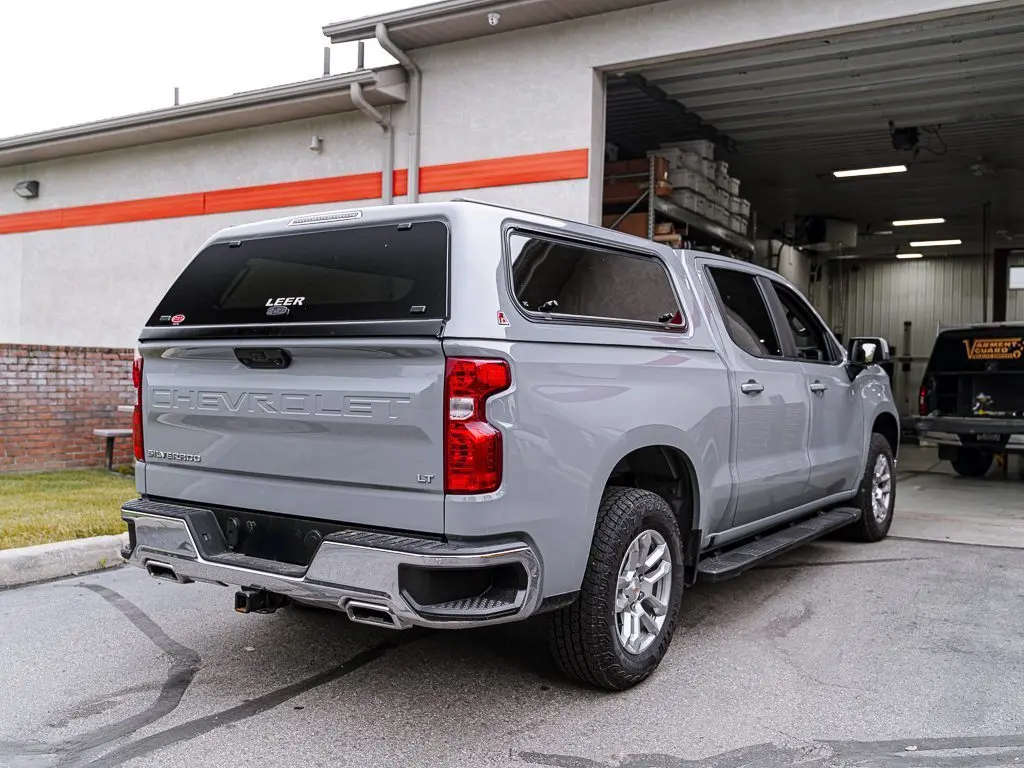
Fiberglass caps are painted to your truck’s factory color code, so the finish matches your bed and cab. Because fiberglass is molded rather than fabricated from flat panels, the shape can follow the contours of your truck’s body lines, sit tight against the cab, and carry a smooth, seamless surface with no visible rivets or seams. A well-fitted fiberglass cap on a matched color genuinely looks like it rolled off the assembly line that way.
Aluminum caps look like what they are, which for a lot of buyers is completely fine. They typically come in white or a limited set of powder-coated or brushed finishes. Color matching is limited, the shapes are boxier, and the construction shows fasteners and seams. On a work truck, that industrial look is often the point, and a white aluminum cap on a white fleet truck looks entirely appropriate.
Two honest notes on the long-term finish:
- Fiberglass gel coat can fade with years of UV exposure if it isn’t cared for, though modern caps use UV stabilizers that have improved this a lot compared to older ones.
- Aluminum can corrode if the coating gets breached and it isn’t maintained, especially with the road salt we deal with through Central Ohio winters.
Durability: it depends on the failure you’re worried about
This is where the “which is tougher” argument usually goes in circles, because the two materials fail differently.
Fiberglass resists dents and scratches well and won’t corrode. Its weakness is sharp impact. A hard enough hit in the wrong spot can crack or chip it, and a crack is a real repair rather than something you bang out.
Aluminum flexes rather than cracks, which is why it’s popular on job sites where things get thrown around. But lighter-gauge aluminum dents, and once it’s dented it stays dented. It also shows dings more visibly than fiberglass shows wear.
We tell customers to think about which kind of damage their truck is actually likely to see. A cap that lives on a construction site takes a lot of small impacts, which favors aluminum. A cap on a truck that mostly commutes and hauls camping gear is more likely to take one unlucky hit, which favors fiberglass.
Which cap fits your truck’s job
A quick way to place yourself:
- Daily driver or personal truck. Fiberglass. The color match, the quieter ride, and the better insulation all matter more when you drive the truck every day and care how it looks.
- Work truck or fleet vehicle. Aluminum, usually. Lighter, cheaper, shrugs off job site abuse, and the industrial look is a non-issue. Heavy-duty aluminum caps with side toolboxes are built specifically for this.
- Camping, overlanding, or sleeping in the bed. Fiberglass, for the insulation and the quiet, unless you’re committed to insulating an aluminum cap yourself.
- You swap the cap on and off frequently. Aluminum, for the weight, unless you have a hoist or cap jacks.
- Cold-weather cargo or sensitive gear. Fiberglass, for the temperature stability and less condensation.
Common questions we get about truck caps
Are fiberglass truck caps worth the extra cost over aluminum?
For a personal truck, most of our customers say yes, because they’re paying for the paint match, the quieter ride, and better insulation, and those are things you notice every day. For a work truck where the cap is a tool, aluminum often makes more sense and the money is better spent elsewhere. There’s no universal answer, which is why we ask how you use the truck before recommending anything. Come in with your year, make, and model and we’ll give you a real quote for both.
Can an aluminum truck cap be painted to match my truck?
Usually not to the same standard as fiberglass. Aluminum caps come in a limited range of factory finishes, and while they can be painted, getting a true color-code match that holds up on aluminum is harder and the results are less consistent than on a molded fiberglass cap designed for it. If an exact factory color match is what you’re after, fiberglass is the right choice.
How much does a truck cap weigh, and can I install it myself?
Fiberglass caps generally run 150 to 200 pounds and aluminum caps often 100 to 150, though both vary with size, bed length, and options. Either way, we don’t recommend a solo install. A cap has to be set down square on the bed rails, clamped evenly, and sealed properly, and dropping one is an expensive mistake. We install caps in-shop so the fit, the clamps, and the seal are right, and so any wiring for a third brake light or interior lighting is done correctly.
Ready to pick the right cap for your truck?
The right material comes down to how you use the truck, how often the cap comes off, and whether you want it to disappear into your paint or just do its job. Stop by our Lewis Center or Hilliard location and we’ll walk through both options for your specific bed, talk through what matters for how you actually drive, and get you a quote. You can also see our truck caps and covers.

STAY CONNECTED
Follow us online to keep up on future updates, discounts, new products, and new projects.


