
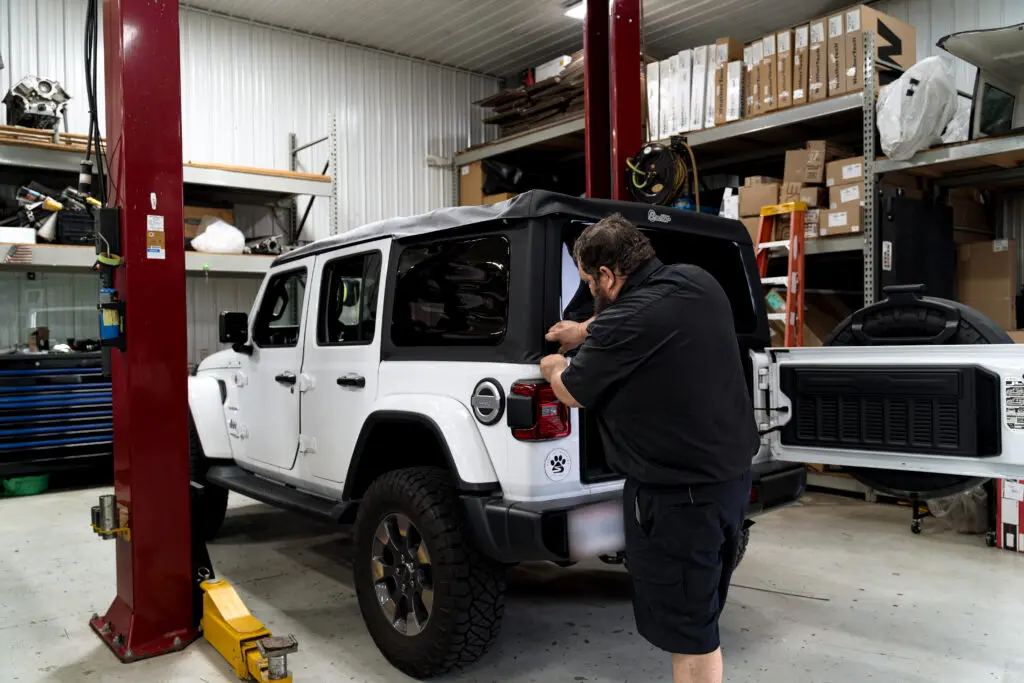
How to Store a Hard Top Without Damaging It
A Jeep or Bronco hard top costs thousands of dollars to replace, and the fastest way to find that out is to lean one against the garage wall for the summer and come back to a crack, a warp, or a long scratch down the side. We see it every season. Owners pull the top off in May full of open-air enthusiasm, set it somewhere “just for now,” and by August they’ve got a damaged top and a repair bill that dwarfs whatever they thought they were saving by doing it themselves. Storing a hard top without damaging it is absolutely doable. The honest question is whether it’s worth doing yourself once you understand what’s actually involved.
Why hard top storage goes wrong more often than people expect
A hard top looks like a single solid piece you can just set down anywhere. It isn’t. It’s an expensive, awkwardly shaped, surprisingly heavy composite or fiberglass shell with a finish that scratches, seals that can grow mold, and a structure that warps if it’s stored under stress. Three things go wrong over and over:
- They’re heavier and more awkward than they look. The rear section of a hard top is the real problem. On a four-door Bronco, the panel over the rear seats alone weighs almost 30lbs, and the full Jeep Wrangler rear hardtop section is heavier and bulkier still. Wrestling that off the vehicle and onto a storage spot without scraping it, dropping it, or tweaking your back is harder than any YouTube video makes it look.
- Storing it wrong warps or cracks it. A hard top can’t just lean against a wall in the corner. Stored at the wrong angle or resting on the wrong contact points, fiberglass and composite tops develop stress cracks and warping over a few months. Once a top warps, it never seals to the body the same way again, and now you’ve got wind noise and leaks on top of the cosmetic damage.
- Moisture and trapped humidity grow mold. The headliner and seals hold moisture. Stored somewhere damp, like a lot of garages and most outdoor setups, mold grows in the headliner and the seals deteriorate. That’s a health issue and a smell you can’t fully get out.
In our experience at the shop, the customers who damage a top almost never did anything obviously reckless. They set it down carefully, in what looked like a safe spot, and the damage happened slowly over the summer while they weren’t looking. That’s the trap.
What proper DIY hard top storage actually requires
It’s worth being straight about this. You can store a hard top yourself without damaging it. It just takes more than most people realize going in. To do it right, you need:
- A way to lift it safely. The rear section is genuinely a two-person job, or you buy a dedicated hoist or storage cart. The hoist systems work well, but they cost real money and most of them mount to your garage ceiling, which is its own project.
- A proper storage cradle or padded surface. The top has to be held in the right orientation, padded at the contact points, and kept off the floor. A blanket on the concrete doesn’t cut it for a multi-month sit.
- Real garage space, dedicated for months. A full hard top takes up a serious chunk of garage real estate, and it’s in the way the entire time it’s stored. This is the irony we point out to customers constantly: a lot of people take the top off to open up the vehicle, then surrender half their garage to storing the thing they removed.
- Climate control, ideally. To avoid the warping and mold issues, the top wants to live somewhere that doesn’t swing through Central Ohio’s humidity and temperature extremes. Most garages don’t qualify.
Add it up and the DIY path is a hoist purchase, a storage cradle, a permanent chunk of garage space, and a humidity gamble. That’s the regret a lot of owners hit halfway through summer. There’s a reason our TopKeep Storage service exists, and it’s that this is more hassle than most people want to own.
The storage problem TopKeep was built to solve
TopKeep Storage is our answer to every problem above, and it’s worth understanding what it actually handles because it covers the whole headache, not just the storage part.
We do the removal, so you’re not the one wrestling a 50-plus-pound section off the vehicle or buying a hoist to do it. The top goes into climate-controlled, secure storage that keeps it safe from weather, scratches, and wear, which means no warping from temperature swings, no mold from garage humidity, and no risk of something falling on it or scraping past it in a working garage. Then we reinstall it cleanly when the season turns. Your garage stays yours the whole time, and the top stays in the condition it was in when it came off.
That’s the trade most owners actually want once they’ve thought it through. You get the open-air summer you bought the vehicle for, and you skip the lift, the cradle, the surrendered garage space, and the humidity gamble entirely.
Who should just store it themselves, and who shouldn’t
Being honest about this, because the answer isn’t the same for everyone:
- You have the space, the equipment, and the climate. If you already own a hoist or cart, have a dedicated climate-controlled space, and don’t mind the garage real estate, DIY storage works fine. Some owners genuinely enjoy having the setup.
- You’re tight on garage space. If storing the top means losing a parking spot or a workspace for months, that math rarely works in your favor. This is most people.
- Your only storage option is a standard garage or outdoors. Without climate control, you’re gambling on warping and mold over a full season. Not worth it on a top that costs thousands to replace.
- You dread the removal itself. If the heavy, awkward rear section is the thing keeping you from going topless at all, handing off the whole process is what actually gets you driving open-air.
Common questions we get about hard top storage
Can I store my hard top on the floor or leaning against a wall?
No, and this is the most common way tops get damaged. Leaning a top against a wall puts stress on contact points it wasn’t designed to bear, which leads to warping and cracks over time, and the finish scratches against whatever it’s touching. Flat on the floor isn’t much better, since it picks up moisture and is in the way of everything. A top needs to be held in the correct orientation, padded, and off the ground, which is exactly what a proper storage setup or our TopKeep service provides.
How do I store a hard top so it doesn’t get moldy?
Mold comes from moisture sitting in the headliner and seals, usually because the top is stored somewhere damp or humid. The fix is climate-controlled storage that keeps humidity stable, plus making sure the top is fully dry before it goes into storage. This is one of the harder things to guarantee in a standard garage, especially through a humid Central Ohio summer, and it’s a big part of why climate-controlled storage matters for a top you’re keeping for months.
Is it worth paying to store my hard top instead of doing it myself?
It depends on what you’d spend and risk doing it yourself. Between a removal hoist, a storage cradle, the garage space you give up for months, and the risk of warping, scratching, or mold on a top that costs thousands to replace, the do-it-yourself route adds up fast in both money and hassle. For most owners, handing off the removal, storage, and reinstall is the option that actually protects the investment and gets them driving open-air without the headache. We’re happy to talk through your specific setup and what makes sense.
Protect your top this summer
If the only thing standing between you and an open-air summer is figuring out where to put the top and how to keep it safe, that’s a solved problem. Stop by our Lewis Center or Hilliard location and we’ll handle the removal, store your top in climate-controlled space that keeps it safe from scratches, warping, and mold, and put it back on cleanly when the season ends. You can also see our TopKeep Storage service here to get started.

STAY CONNECTED
Follow us online to keep up on future updates, discounts, new products, and new projects.


