
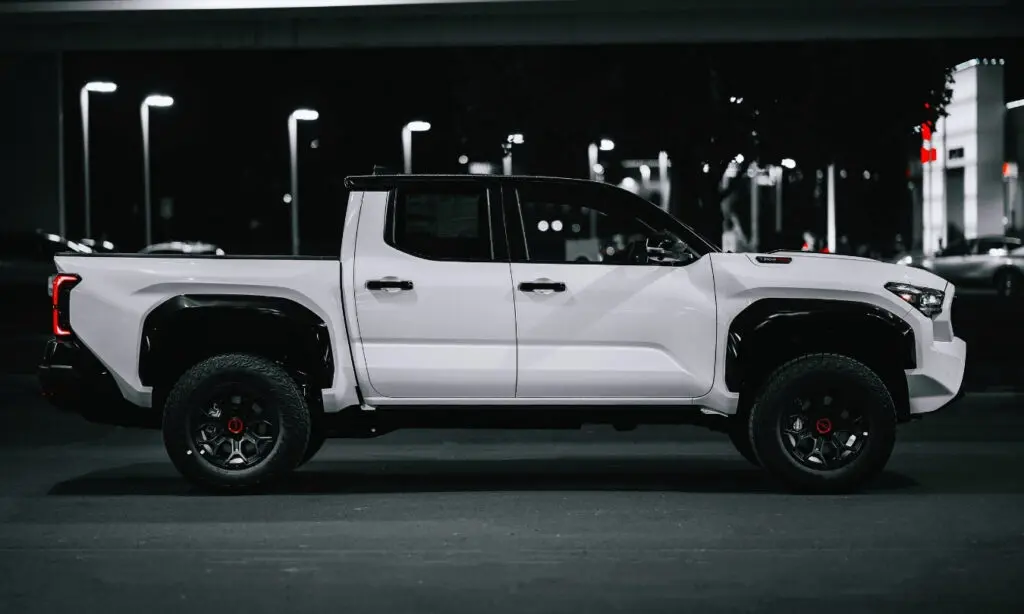
Lowering Your Truck or Car: Springs, Kits & Coilovers
Most people shopping to lower their vehicle are really choosing between two things without knowing it: a fixed drop they install once and live with, or an adjustable setup they can dial in over time. That single decision, lowering springs versus coilovers, drives the cost, the ride quality, and how much control you have over the final stance. Get it right, and you end up with a vehicle that looks the way you want and handles better than stock. Get it wrong and you’re chasing rubbing tires, a harsh ride, or a stance that’s a half inch off and impossible to fix. Here’s how to make the call.
What lowering actually does to a vehicle
Lowering drops your vehicle’s center of gravity, which reduces body roll and can improve cornering grip and stability. It also closes up the fender gap, that space between the tire and the wheel arch, which is the look most people are after. On a truck or SUV, lowering creates a more aggressive street stance that the factory suspension can’t replicate. On a car, it tightens up handling on top of the visual change.
The tradeoffs are worth consideration. You lose ground clearance, which means steeper driveways, speed bumps, and parking blocks become obstacles you have to think about. Ride quality can get firmer depending on the setup. And done wrong, lowering causes tire rubbing and accelerated wear. None of these are dealbreakers, but they’re the reason the how matters as much as the how much.
Lowering springs: the fixed-drop option
Lowering springs are the most straightforward way to drop a vehicle. They replace your factory coil springs in the stock location with shorter, often stiffer springs. As spring manufacturers explain it, you pull one spring out and put the other in, and the vehicle drops a fixed amount.
A few things to understand about that fixed drop:
- The number is approximate. A “2-inch lowering spring” is designed to drop the vehicle about 2 inches, but the actual result depends on your specific vehicle’s weight. Options like a bigger engine, four-wheel drive, or added equipment change how far it actually settles. Your 2-inch springs might net 1.5 inches, or 2.5.
- There’s no adjustment. The vehicle sits where the spring puts it. If you want it a little lower or a little higher later, you’re buying different springs.
- You usually need matching shocks. Lowering the vehicle reduces suspension travel. Run your stock shocks and you’ll bottom them out, which rides poorly and wears the shocks out fast. A proper lowering setup pairs the springs with shocks valved for the reduced travel.
Lowering springs make the most sense when you know exactly the look you want, you’re working with a budget, and you don’t plan to change the height again. It’s a clean, proven path for a mild, set-it-and-forget-it drop.
Coilovers: the adjustable option
A coilover combines the spring and the damper into one assembly, with a threaded body that lets you adjust ride height across a range instead of locking you into a single drop. Higher-end coilovers also let you adjust the damping (how firm or soft the ride is), and some separate rebound and compression adjustment.
What that adjustability buys you:
- Dial in the exact stance. Instead of a fixed 2-inch drop, you set the height where you want it and change it later if you change your mind. This is the difference between hoping the springs land where you want and putting the vehicle exactly there.
- Corner balancing. On a performance build, you can fine-tune the height at each corner to even out weight distribution, which improves handling. You can also correct a side-to-side lean that some vehicles have from the factory.
- Tunable ride quality. Adjustable damping means you can soften the ride for daily driving or firm it up for spirited driving, rather than living with whatever a fixed spring-and-shock combo gives you.
The tradeoff is cost and complexity. Coilovers are a bigger investment than springs, and the adjustability only pays off if it’s set up correctly. A coilover installed and never properly dialed in is just an expensive spring. We’ve seen customers buy quality coilovers, set them too low or with the damping wrong, and end up with a worse ride than a basic lowering spring would have given them. The hardware is only half the job.
Truck-specific lowering: methods cars don’t have
Lowering a truck is its own world, because trucks are built differently front to rear and there are drop methods that don’t exist on cars. If you’re lowering a pickup, these are the pieces that come up:
- Drop spindles (or drop knuckles). A taller spindle that relocates the hub upward, lowering the truck without changing the spring or the suspension geometry much. This is often the best option for ride quality, because it drops the truck while keeping the suspension travel close to stock.
- Lowering coil springs or drop coils up front on coil-sprung trucks, same fixed-drop principle as on a car.
- Rear lowering: leaf springs, flip kits, shackles, and blocks. Most trucks use leaf springs in the rear, so dropping the back end uses different hardware than the front. A flip kit (moving the axle above the leaf spring instead of below it) gets the biggest drop. Lowering blocks and shorter shackles do smaller drops.
- Front-to-rear matching. Trucks are usually lowered with a staggered drop, like a “2/4” (2 inches front, 4 rear) to keep a level or slightly raked stance. Getting the front and rear drops to work together is part of why truck lowering takes planning.
Belltech is the name most associated with truck and SUV lowering, and it’s one of the lowering brands we stock, along with Ground Force, Eibach, and Hotchkis. Belltech makes drop spindles, lowering coils, complete drop kits, and coilovers across most popular truck platforms, which is why their name comes up constantly in lowering conversations.
A legal note for Ohio drivers
Before you go as low as possible, know the line Ohio draws. Under Ohio Revised Code 4513.021, it’s illegal to modify a vehicle in a way that causes the body or chassis to contact the ground, exposes the fuel tank to collision damage, or causes the wheels to contact the body under normal operation. In plain terms, a tasteful street drop is fine. A slammed setup that scrapes, rubs the tires into the fenders, or drags the frame crosses into territory that isn’t street legal in Ohio. We keep customers on the right side of that line when we plan a drop.
Who should choose what
A quick breakdown by what you’re actually after:
- You want a clean, mild drop and you’re done. Lowering springs with matched shocks. Simplest, most cost-effective path for a set stance.
- You want to dial in the exact height or you might change it later. Coilovers. Worth it if you’ll actually use the adjustability.
- You’re lowering a truck and ride quality matters. Drop spindles up front (they preserve geometry) paired with the right rear drop hardware.
- You’re building for handling, not just looks. Coilovers with adjustable damping, set up and corner-balanced properly.
- You daily drive on rough roads. Go milder than you think, and prioritize ride quality in the setup. The lowest stance is rarely the most livable.
Common questions we get about lowering
Do lowering springs or coilovers ride better?
It depends entirely on the setup, not the category. A quality lowering spring matched to the right shocks can ride very well. A cheap coilover set too low rides terribly. In general, coilovers give you more ability to tune the ride to your liking because of adjustable damping, but they only ride better if they’re set up correctly. A properly matched spring-and-shock package often rides better than a poorly configured coilover.
Will lowering my vehicle cause my tires to wear out faster?
It can, if the alignment isn’t corrected after the drop. Lowering changes the suspension geometry, which throws off the alignment angles, especially camber. Left uncorrected, that wears the inside edges of the tires fast. This is why an alignment after a lowering install isn’t optional. We align every lowered vehicle to specs appropriate for the new ride height so the tires wear evenly.
Can I lower my truck and still tow or haul with it?
To a point. A mild drop on a half-ton you occasionally load is workable, but lowering reduces suspension travel and ground clearance, which works against towing and hauling. If your truck regularly carries heavy loads or tows, lowering fights against what the truck is for. A street truck that never works and a work truck that never poses are two different builds, and we’ll tell you honestly if a drop makes sense for how you use yours.
Ready to drop your truck or car the right way?
Whether you want a mild street stance, a dialed-in coilover setup, or you’re just trying to figure out springs versus coilovers for your specific vehicle, the right answer comes down to your goals, your budget, and how you actually drive. Stop by our Lewis Center or Hilliard location and we’ll walk through your options, what each does to your ride and geometry, and handle the alignment afterward so it’s done right. You can also see our suspension and lowering services here.

STAY CONNECTED
Follow us online to keep up on future updates, discounts, new products, and new projects.


