image

TOWING & HITCH INSTALLATION DONE RIGHT

There's a difference between bolting on a hitch receiver and setting up a truck to tow properly. A basic hitch handles a bike rack or a light cargo trailer. A boat, a camper, a horse trailer, or a fifth wheel is a different situation, one where the right hitch class, weight distribution setup, and brake controller aren't optional. Getting this wrong doesn't just affect how the truck drives; it affects whether the load stays connected and controlled on the highway.

We install receiver hitches, fifth wheel and gooseneck setups, brake controllers, and weight distribution systems at both our Lewis Center and Hilliard locations. We carry products from CURT, Reese, B&W, and Draw-Tite, covering everything from basic Class III receiver installs to heavy-duty fifth wheel applications. Before recommending anything, we look at your truck's tow rating, your trailer's weight, and how you're going to use it. Central Ohio truck owners have been bringing their truck accessory and towing needs to us since 1999.

SCHEDULE WITH US

FIND THE RIGHT TOWING SETUP FOR YOUR TRUCK

We handle towing setups from standard receiver hitch installs to fully configured fifth wheel and gooseneck rigs. The right setup depends on what you're towing, how much it weighs, and how the truck is rated to handle it.

Receiver Hitch Installation

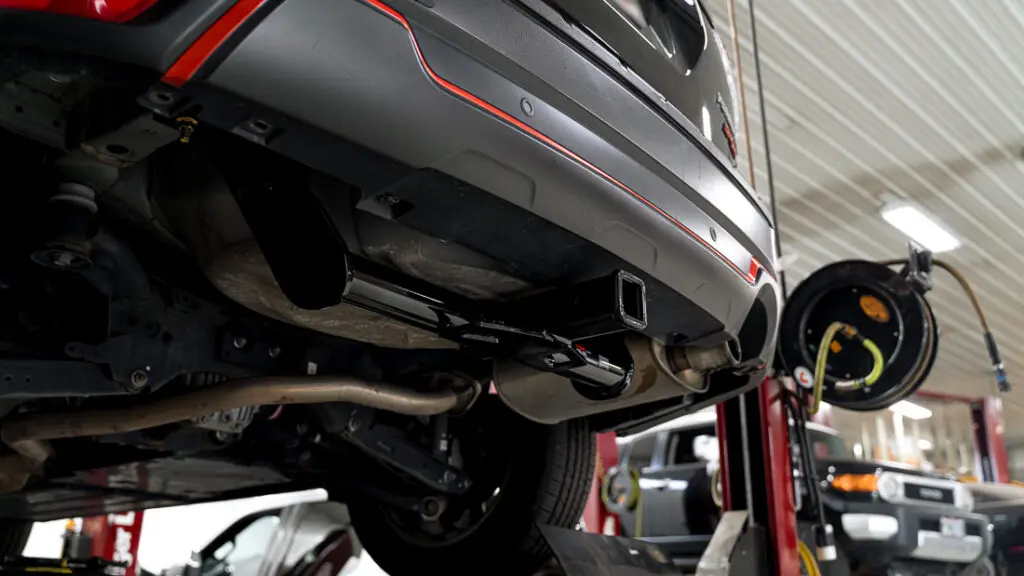
We install Class I through Class V receiver hitches depending on your tow rating and intended use. Every install includes the correct wiring harness connection for trailer lights and the proper torque on mounting hardware. We also install ball mounts, hitch balls, and pintle hooks sized to your specific application. If you're not sure what class hitch your truck needs for a given load, we'll work through it before the install.

5th Wheel & Gooseneck Setups

Fifth wheel and gooseneck hitches mount in the truck bed and are designed for heavy loads: large campers, livestock trailers, flatbeds, and equipment trailers. Fifth wheel hitches use a kingpin coupling and are common on RV and camper setups. Gooseneck hitches use a ball mounted in the bed and are standard for agricultural and commercial trailers. B&W makes some of the best dual-purpose (fifth wheel/gooseneck) systems on the market, and we install them at both locations.

Brake Controllers

Ohio law requires a brake controller when towing a trailer with a gross vehicle weight rating over 2,000 lbs that is equipped with electric brakes. Most trailers over 3,000 lbs have electric brakes. A brake controller synchronizes the trailer's braking system with the truck's, reducing stopping distance and preventing the trailer from pushing the truck during hard stops. We install proportional and time-delayed brake controllers. Proportional is the more responsive of the two and the right choice for most applications.

Weight Distribution & Sway Control

A trailer that's heavier than about 50% of the tow vehicle's weight can cause the rear of the truck to squat, reducing front-wheel steering and braking control. Weight distribution systems use spring bars to redistribute load across all four wheels and restore level tow posture. On lifted trucks, the weight distribution math changes further since ride height and suspension geometry have already shifted. Sway control bars add a friction damper to limit trailer sway in crosswinds or when passing large vehicles.

YOU NEED THIS IF:

  • You're towing a trailer, camper, boat, or equipment and need a hitch installed to the correct spec
  • You're moving to a fifth wheel or gooseneck setup for heavier hauling
  • Your trailer has electric brakes and you don't have a brake controller installed
  • You've noticed the rear of the truck squatting under load or the trailer swaying at highway speeds
  • You're getting a new truck and want the towing setup done correctly before you hook anything up
Talk to Our Experts

COMMON TOWING & HITCH QUESTIONS

  • What hitch class do I need for my trailer?

    Hitch class is determined by your trailer's gross weight and tongue weight. Class I handles up to 2,000 lbs gross / 200 lbs tongue, light duty for bike racks and small cargo. Class II goes to 3,500 lbs. Class III handles up to 5,000–8,000 lbs and is the most common truck hitch class. Class IV and V are for heavy-duty applications up to 18,000+ lbs gross. Your truck's tow rating sets the ceiling. The hitch class has to be within that rating. If you're not sure where your trailer falls, bring the specs and we'll match the right hitch class to the load.
  • Do I need a brake controller for my trailer?

    In Ohio, a brake controller is required by law when towing a trailer over 2,000 lbs gross vehicle weight rating that is equipped with electric brakes. As a practical matter, most trailers over 3,000 lbs have electric brakes. Beyond the legal requirement, a properly calibrated brake controller significantly reduces stopping distance and prevents the trailer from pushing the tow vehicle during hard stops, which matters more the heavier the load is. We install both proportional and time-delayed controllers depending on your preference and application.
  • What's the difference between a 5th wheel hitch and a gooseneck hitch?

    Both mount in the truck bed and handle heavier loads than a standard receiver hitch. The difference is in the coupling mechanism. A fifth wheel hitch uses a large kingpin-and-plate connection (the same system used on semi trucks) and is standard on large RVs and campers. A gooseneck uses a ball-and-coupler connection in the bed and is the standard for agricultural trailers, horse trailers, and equipment haulers. The load ratings are comparable; the choice is usually dictated by what your trailer requires. B&W makes a combination hitch that handles both, which is worth considering if you tow different trailer types.
  • Can adding a trailer hitch affect my vehicle's tow rating?

    The hitch itself doesn't change the tow rating. Your truck's tow rating is set by the manufacturer based on the engine, transmission, cooling system, and frame. A Class V hitch on a truck rated to tow 8,000 lbs doesn't make it capable of towing 18,000 lbs. The hitch has to be matched to the truck's actual tow rating, not the other way around. Where people run into trouble is installing a hitch rated higher than the truck and assuming the truck can handle the load. We check your truck's tow rating before recommending a hitch so that doesn't happen.

Contact form

form image

Reviews

Top