
Early Warning Signs Your Brakes Need Service (and When to Stop Driving)
Brakes almost always warn you before they fail. The trick is knowing which sounds and sensations mean “plan a visit soon” and which mean “stop driving now.” Catch the early ones and you are replacing a set of pads. Ignore them and you are buying pads, rotors, and sometimes more.
After 25 years of brake service at our shop, the pattern we see most often is simple: people wait. A little squeal becomes a grind, and a cheap fix becomes an expensive one. Here are the early warning signs worth acting on, what each one actually means, and when it crosses the line from “keep an eye on it” to “get it looked at now.”
That Squeal Is Your Brakes Talking
Squeaky brakes are the single most common early warning sign, and most of the time they are doing exactly what they were designed to do. Most modern brake pads have a built-in wear indicator, a small metal tab that starts contacting the rotor when the friction material gets low. It makes a high-pitched squeal on purpose to tell you the pads are getting close to the end. That kind of squeal means plan a pad replacement soon, not pull over immediately.
That said, not every squeak means worn pads. In our experience, a light squeal on a damp morning that clears up after your first few stops is usually just surface rust and moisture on the rotors, and it is harmless. A small stone caught between the pad and rotor can do it too, and so can cheap or glazed pads. The tell is consistency. An occasional damp-morning squeak is nothing. A squeal every single time you brake is your pads asking to be looked at.
When Squealing Turns to Grinding, Stop Waiting
A brake grinding noise is a completely different situation. That harsh, metallic, metal-on-metal grinding sound usually means the pad friction material is gone and the bare metal backing plate is now dragging against the rotor. This is not a warning anymore. It is active damage happening every time you press the pedal.
Two things are going wrong at once. First, that metal-on-metal contact gouges and scores your rotors, which turns a straightforward pad replacement into a pad and rotor job. Second, as Brembo points out, worn-out brakes lose stopping power and lengthen your braking distance, because bare metal simply does not grip like proper friction material. If you are hearing a grinding sound when you brake, that is the one to take seriously. Get it inspected right away.
The Other Warning Signs People Miss
Noise is the obvious one, but your brakes send other signals too.
A soft or spongy pedal, or one that sinks toward the floor, usually points to air in the brake lines or old, moisture-laden brake fluid, both of which weaken the hydraulic pressure that stops your vehicle.
A vibration or pulsing through the pedal or steering wheel when you brake typically means warped rotors or uneven deposits on the rotor surface, most noticeable when slowing from highway speed.
The vehicle pulling to one side when you brake can mean a stuck caliper, uneven pad wear, or a hydraulic issue, and it hurts your control in a hard stop.
A dashboard brake light can signal low fluid, a worn-pad sensor, or an ABS fault, and it is always worth a look.
A burning smell after braking points to overheated brakes, sometimes from a caliper that is sticking and dragging.
When to Replace Brake Pads
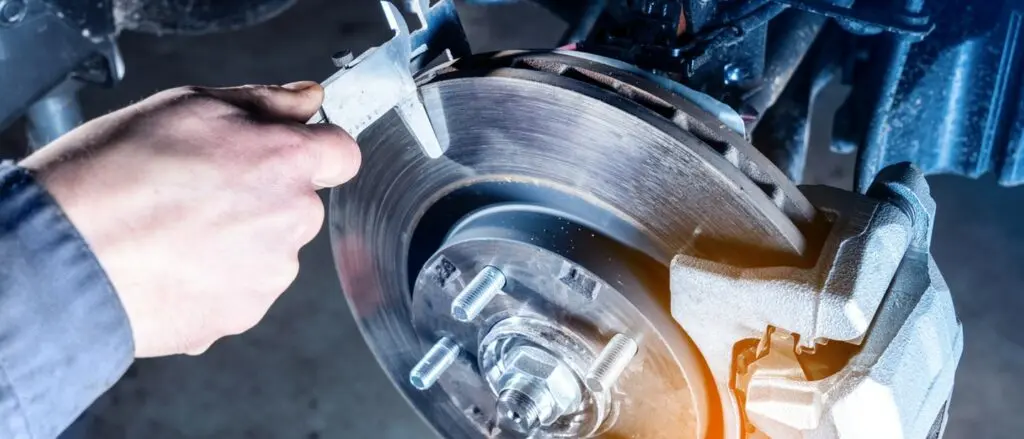
Here is the straight answer on timing. A new brake pad starts with roughly 10 to 12 millimeters of friction material. When it wears down to about 3 millimeters, it is time for a new set. The wear-indicator squeal is engineered to start right around that point, which is why we treat a consistent squeal as the signal to schedule replacement rather than something to tune out.
On mileage, brake pads typically last somewhere between 30,000 and 70,000 miles, but that range is wide for a reason. Pad compound, vehicle weight, and how you drive all move the number, and a lot of stop-and-go city driving wears pads far faster than steady highway miles. That is why we do not put much stock in guessing by the odometer. The reliable answer comes from actually looking at the pad thickness, which we check as part of any inspection.
Why Waiting Costs You
The math on brakes is unusually clear. A pad replacement caught at the squeal stage is one of the more affordable services on your vehicle. The same brakes left until they grind become a pad and rotor job, and sometimes a caliper too, at a much higher price. Beyond the cost, worn brakes stop your vehicle less effectively and over a longer distance, which is the part that actually matters when someone pulls out in front of you.
Common Questions About Brake Warning Signs
Why are my brakes squeaking?
Usually it is the wear indicator letting you know the pads are getting low, which means it is time to plan a replacement. But not always. A squeal that only shows up on a damp morning and disappears after a few stops is typically just moisture and light rust burning off, which is harmless. Glazed pads, cheap pads, or a bit of debris can also squeak. The difference is consistency: a squeal on every stop is worth checking, a one-off damp-morning squeak usually is not.
Is it safe to drive with grinding brakes?
Not really, and definitely not for long. Grinding almost always means the pad material is gone and metal is contacting metal, which damages your rotors quickly and stretches out your stopping distance. Every mile you drive on grinding brakes adds to the eventual repair bill and cuts into how well the vehicle stops. If you are hearing it, get the brakes inspected as soon as you can.
How long do brake pads last, and when should I replace them?
Most pads last between 30,000 and 70,000 miles, though heavy stop-and-go driving shortens that. The better rule than mileage is thickness and sound: replace the pads when the friction material is down to around 3 millimeters, or when you first hear that consistent wear-indicator squeal. An annual brake inspection takes the guesswork out of it.
Book a Brake Inspection Before It Gets Expensive
If your brakes are squealing, grinding, or just not feeling the way they used to, the cheapest day to deal with it is today. Book a brake inspection at our Lewis Center or Hilliard location and we will check the full system, tell you honestly what needs attention now versus what can wait, and give you a straight quote. Every job is quote-based, because a real number comes from looking at your specific vehicle, not from a guess. Do not wait for the squeal to turn into a grind.

STAY CONNECTED
Follow us online to keep up on future updates, discounts, new products, and new projects.


