
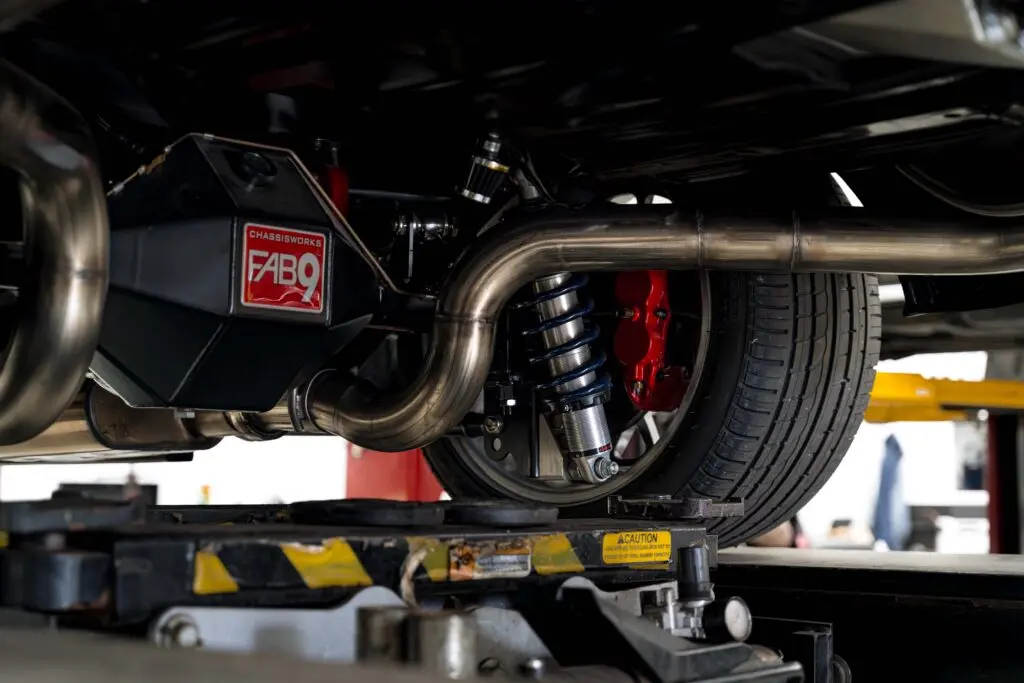
Why Suspension Service Matters: Ride, Safety, Tires, and Control
Most people think of their suspension as the thing that makes the ride comfortable. It does, but that is actually the least important part of its job. Your vehicle suspension is also what keeps your tires planted on the road, which means it is quietly responsible for how your truck stops, steers, and holds a lane. Comfort is just the part you happen to notice.
That is why suspension service is one of the most underrated maintenance items there is. Suspension wears out so gradually that you adapt to it without realizing, right up until the day you actually need the grip and control it is supposed to provide. Here is what a healthy suspension really does for you, across ride quality, safety, tire life, and handling, and why keeping it up is worth it.
What Your Suspension System Is Made Of
Your suspension is a system of parts working together, not a single component. Shocks and struts dampen motion and control how the vehicle reacts to bumps. Springs support the weight and set the ride height. Control arms and bushings locate the wheels and let them move in a controlled way, while ball joints and tie rods handle steering, and the sway bar keeps the body flat in corners. The whole point of all these suspension components working together is to keep your tires in firm, consistent contact with the road. When one part wears out, that contact suffers, and so does everything that depends on it.
Ride Quality: The Benefit You Actually Feel
Ride quality is the benefit most people notice first, because it is the one you feel every day. A healthy suspension soaks up bumps and settles the body quickly, so the truck feels planted instead of floaty or harsh. When shocks and struts wear out, that control goes away, and you get the bouncing, the harshness over rough pavement, and the wallowing feeling on the highway. It is worth understanding that a declining ride is not just a comfort issue. It is usually the first visible sign of the safety and tire problems below.
Safety: The Benefit You Do Not Feel Until You Need It
This is the reason suspension service matters most, and it is the part drivers underestimate. Because your suspension keeps the tires on the road, worn components directly affect how your vehicle stops and stays controllable. According to Monroe, worn shocks and struts reduce steering precision, stopping performance, and overall stability. Nose dive under braking can lengthen your stopping distance, and a vehicle that rolls or sways through corners is harder to keep composed in an emergency maneuver.
In our experience, this is the gap between how a truck feels and how safe it actually is. A worn suspension can still feel fine on a calm drive to work, then let you down in the exact moment, a hard stop or a sudden swerve, when you need every bit of grip. That is why we treat suspension as a safety system, not a comfort feature.
Tire Life: Your Suspension Shows Up in Your Tires
Here’s one that a lot of people miss. When your suspension is worn, your tires pay for it. Shocks that can no longer control the bouncing let the tires hop and skip across the road, which wears the tread in uneven patches, a pattern called cupping. Worn steering and suspension components also throw off your alignment, which chews the edges off your tires. If you are replacing tires more often than you should be, or wearing them unevenly even though you keep up with rotations and wheel alignment, the real problem may be underneath. Buying new tires without fixing the suspension underneath is just paying twice.
Handling and Control: Keeping the Truck Composed
A healthy suspension keeps the vehicle stable and predictable, whether you are braking hard, taking a corner, or working the truck under a load. When components wear, the truck starts to feel loose, vague, or unsettled, especially at highway speed or when you are towing and hauling. For a truck that actually earns its keep, this matters more than it does on a car, because you are asking the suspension to manage real weight. Keeping it in good shape is what keeps a loaded truck feeling planted instead of nervous.
When It Is a Repair and When It Is an Upgrade
Suspension work generally splits into two conversations, and knowing which one you are in saves time and money. If you are noticing specific symptoms like clunks, excessive bouncing, pulling to one side, or nose dive, that is the repair side, and our guide to the signs of worn shocks walks through exactly what to watch for. If your suspension is healthy but you want it to do more, like lift the truck, level it, tow better, or handle sharper, that is the upgrade side, and our upgrade guide covers that decision in detail. This article is about the thing underneath both of those: keeping the system healthy so it can do its job in the first place.
Common Questions About Suspension Service
How often should I have my suspension inspected?
There is no single hard rule, but a good habit is to have it looked at around every 50,000 miles or whenever you are already getting tires rotated or an alignment done. If you drive on rough roads, carry heavy loads, or spend your winters dodging Ohio potholes, check it more often, because those conditions wear suspension components faster than easy highway miles do.
Can worn suspension really affect braking and tire wear?
Yes, and this is the part people underestimate. Worn shocks and struts let the tires lose firm contact with the road, which lengthens your stopping distance and causes uneven, cupped tire wear. So a tired suspension is not just a rough ride. It is quietly costing you in both safety and tires at the same time.
How much does suspension repair cost?
It depends entirely on what is worn. Replacing a pair of shocks is a very different job from addressing worn bushings, ball joints, or a full front end, and the parts and labor vary by vehicle. Rather than guess at a number, we inspect the suspension, show you what is actually worn, and give you a straight quote. Every job here is quote-based for that reason.
Get Your Suspension Checked
If your ride has gotten rougher, your tires are wearing unevenly, or the truck just does not feel as planted as it used to, it is worth having the suspension looked at before it costs you tires or control. Stop by our Lewis Center or Hilliard location and we will inspect the whole system, tell you honestly what needs attention now versus what can wait, and give you a straight quote. Twenty-five years of Central Ohio roads have shown us what wears out and when, and we would rather catch it early than after it takes your tires with it.

STAY CONNECTED
Follow us online to keep up on future updates, discounts, new products, and new projects.


