
How to Protect Your Truck’s Paint in Winter: PPF, Ceramic, and Sealant Compared
The biggest threat to your truck’s paint is not a careless shopping cart or a stray branch. It is the road salt and brine your county dumps on the roads all winter, which is corrosive, clings to everything, and turns every little chip into the start of a rust problem. Getting your paint protected before the salt trucks roll out is the difference between a finish that still looks new in five years and one that clearly does not.
There are three real ways to protect your paint through an Ohio winter, and they line up neatly by budget: paint protection film at the top, a ceramic coating in the middle, and a good sealant on the budget end. Each one fights salt and winter grime in a different way, so here is how they actually compare and which one makes sense for your truck.
Why Winter Is So Hard on Your Truck’s Paint
Road salt and brine are corrosive, and they stick to your paint instead of blowing off like dry dust would. Mixed with moisture and the constant freeze and thaw of an Ohio winter, that salt slowly etches the clear coat and goes to work on any chip or scratch that reaches bare metal, which is exactly where rust starts. On top of that, the salt trucks themselves throw sand and grit that chips your front end at highway speed. Every option below is really about the same goal: keeping that salt and grit from reaching and bonding to your paint.
Paint Protection Film: The Premium Winter Shield
Paint protection film is the only option that physically blocks winter’s worst, the rock chips and sand-blasting that salt trucks and gravel throw at your front end. It is a clear urethane film that absorbs impacts before they reach the paint, and quality film even self-heals light surface scratches with heat. Applied to the high-impact areas like the hood, bumper, fenders, and mirrors, or across the full front, it is the strongest protection there is, and a good film lasts around 7 to 10 years.
For a truck you plan to keep looking sharp, PPF on the front end is the winter move, because that is where the chips happen. It is worth understanding the full picture before you commit, and our guide to how a clear bra works walks through it in detail. The honest tradeoff is that PPF costs the most up front. It also does the most, and it is the only one of these three that stops physical damage rather than just chemical damage.
Ceramic Coating: The Mid-Tier Salt Repellent
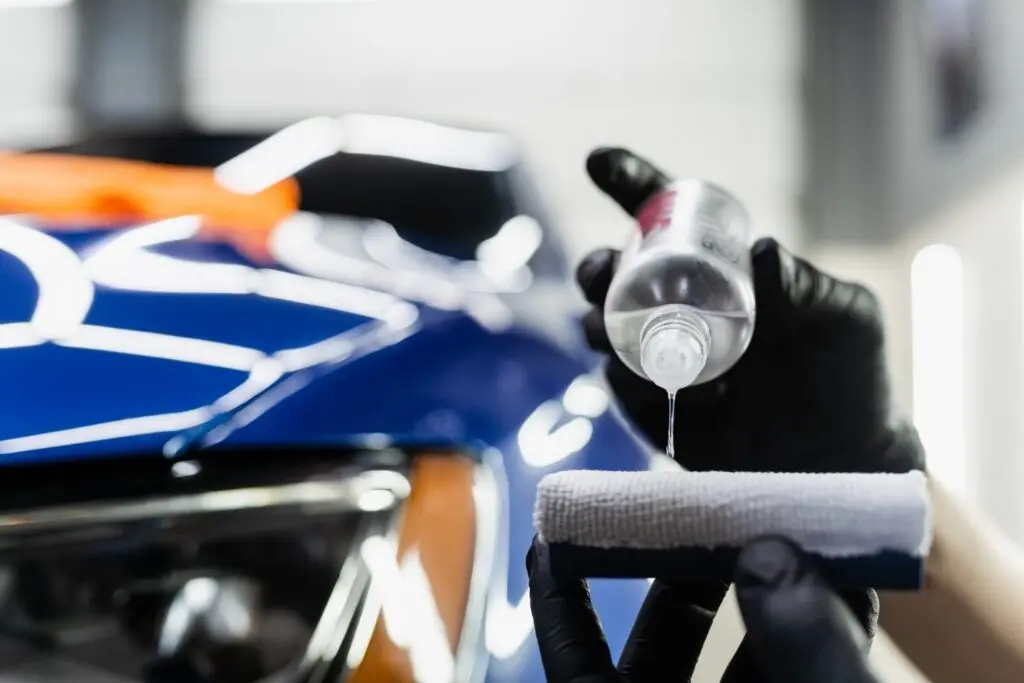
A ceramic coating is a chemical layer that bonds to your paint and makes the surface extremely water-repellent. That matters a lot in winter, because salt spray, slush, and meltwater sheet off a coated surface instead of clinging to it, which means less salt sitting on your paint and far less etching over the season. You also get UV protection and a finish that is dramatically easier to wash all winter, since grime does not grab onto it.
The catch is that a ceramic coating will not stop a rock chip. That is PPF’s job, and the two are often layered together for exactly that reason. But as chemical protection goes, ceramic is a big step up from wax, it lasts two to five years, and it is the mid-tier choice we recommend most for daily drivers who want low-maintenance salt defense without the cost of a full film job.
Wax or Sealant: The Budget Layer
If PPF and ceramic are not in the budget this year, a sacrificial top layer still helps, because it adds slickness that lets salt and grime rinse off more easily instead of baking on. Here is the important part though: for winter, a synthetic paint sealant is the better pick than a traditional carnauba wax. A sealant bonds to the clear coat and lasts six months to a year, holding up to cold and salt, while natural wax tends to wash away in a month or two, right when you need it most.
It will not stop chips and it will not last like a ceramic coating, but a sealant is real, affordable protection you can refresh cheaply before and during the season. In our experience, it is the smart minimum for anyone who parks outside all winter.
The Winter Habit That Matters More Than People Think
Whichever level you choose, none of it replaces actually washing the salt off. Protection makes the salt rinse away more easily, but it still has to be rinsed away, so wash your truck through the winter and pay attention to the lower panels where salt collects. It is also worth touching up any paint chips before winter hits, because a chip is an open door for salt to get under the paint and start rust that no top-surface protection can reach once it begins.
Which Level of Protection Is Right for Your Truck?
If you have a newer truck you plan to keep, or you run gravel roads and salt-truck routes, PPF on the front end is worth it, and pairing it with a ceramic coating over the rest of the truck is the setup that protects the most. If you want low-maintenance, salt-repellent protection and a much easier winter of washing, a ceramic coating is the sweet spot for most daily drivers. And if you are working with a tight budget or protecting an older truck you just want to keep from getting worse, a good sealant is the practical call.
Common Questions About Winter Paint Protection
Does paint protection film help in winter?
Yes, it is the best winter protection there is. PPF physically blocks the rock chips and sand-blasting from salt trucks and gravel that would otherwise chip your paint and expose bare metal to rust. It also makes salt and grime easy to rinse off. Because winter damage hits the front of the vehicle hardest, a front-end PPF kit gives you the most protection for the money.
Is a ceramic coating or wax better for winter?
A ceramic coating, by a wide margin. It is far more water-repellent and far more durable, so salt and slush sheet off instead of sitting on the paint, and it lasts years rather than weeks. Wax or a synthetic sealant is the budget alternative if a ceramic coating is not in the cards, and between those two, a sealant holds up to winter better than wax.
How much does winter paint protection cost?
It depends on which level you choose and how much of the truck you are covering, since a full PPF job, a front-end film kit, a ceramic coating, and a sealant are all very different jobs. Rather than quote a number that will not match your truck, we look at the vehicle and what you are trying to protect and give you a straight price. Every service here is quote-based.
Get Your Truck Ready Before the Salt Trucks Do
The best time to protect your paint is before the first salt of the season, not after you have already spent a winter driving through it. Stop by our Lewis Center or Hilliard location and we will walk you through paint protection film, ceramic coating, and sealant, and help you land on the right level for your truck and your budget. Come in or schedule a consultation, and we will get your paint ready for whatever this winter throws at it.

STAY CONNECTED
Follow us online to keep up on future updates, discounts, new products, and new projects.


